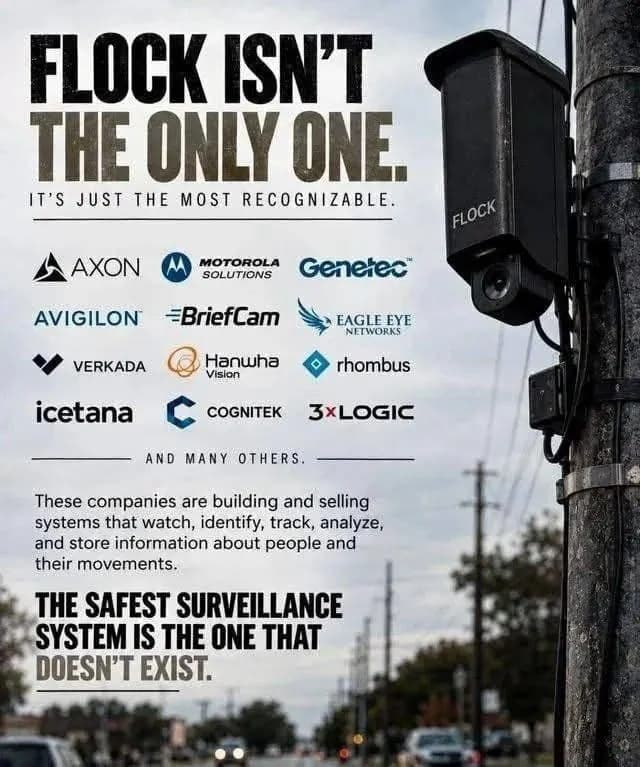
The data resides on flock servers. Access is only available thru an AI monitored interfaces required to be on flock servers the law enforcement accesses. The owner owns the data, but is not in possession of it. That can easily be controlled. It’s not like the local cop, who suspects his wife is cheating, can walk down the hall and take the local Dept IT guy lunch and get unlimited and unsupervised access.
I suspect different people with different degrees of paranoia see it differently. I’m just not at all concerned of pictures taken in public. By the way, I enjoyed the minority
report, but we are along way from predictive crime arrests. I just don’t fear the tech and see more good than abuse.
The “if you aren’t doing anything wrong, you don’t have anything to worry about” argument doesn’t really address my concern with Flock cameras.
For one thing, I don’t have a problem with surveillance cameras in general. If Home Depot puts a flock camera in its parking lot, that’s fine with me. I have a choice about whether I shop at Home Depot, and I understand that entering private property comes with certain expectations. (Lowe’s does too, so Ace it is! )
What bothers me is putting this technology on public streets and creating a searchable record of where people and their vehicles go when they are simply going about their lives.
And I think it’s worth paying attention to where this technology is heading. We’re increasingly seeing law enforcement combine different sources of data including license-plate readers, financial information, travel patterns, etc. to identify people who are considered “suspicious” and decide who should be investigated or pulled over. Recent reporting on Border Patrol’s predictive intelligence teams is a pretty good example of this: Gizmodo’s reporting on financial data and traffic stops
Just in the past few weeks, Flock itself is moving beyond simply saying, “Here,s a list of the license plates that were captured.” Its newer AI tools allow investigators to search across camera networks using natural-language descriptions of vehicles and people. That makes the system considerably more powerful as an investigative and tracking tool. Wired’s reporting on Flock’s AI search system.
That’s where “I haven’t done anything wrong” becomes beside the point. I don’t want to live in a society where the government has the ability to compile a detailed picture of my movements and other activities and then use algorithms or databases to decide whether my behavior looks suspicious enough to warrant police attention. The recent tendencies of the executive branch to be retaliatory towards those who dissent is really concerning (there are examples from both sides of the aisle here).
Maybe that system is always used responsibly. Maybe it isn’t.
The question I think we should be asking is: Do we want to give the government that capability in the first place, and what limits are we putting on it? Especially without the public having a say.
Agree limits need to be in place. Individual
law enforcement shouldn’t be able to nation wide searches unless they have a search warrant. It’s kinda like cell phone data today.
The service provider has all the data already but LE does not have unlimited or on demand access to it. If your concerns are real, you have a tracker you carry with you mostly likely every minute of the day. I’d think yall should be more concerned about the cell phone data than a picture that is being taken of all. Pictures taken of cars on public streets is not a big fear of mine.
Same. I’m not particularly worried about a camera taking a picture of my car. I’m more interested in what information is being derived from that picture, how long it’s retained, who can search it, what they can search for, and what legal standard applies before they can do so.
As an aside, I do appreciate discourse over this. I’m not trying to “win” any argument here and I do like hearing other people‘s points of view. It helps me better form my own.
I’m definitely not “paranoid.” I’m just acutely aware of how it is being used now, and I’m also very familiar with how parts of law enforcement operate behind the scenes.
As far as access to the data, there are always weaknesses than can be exploited, both human and technological.
I routinely see drones circling the skies near my house at night. What are they doing up there? Who’s controlling them and what are they doing with the information? These are definitely either law enforcement or military, but there’s no transparency into that. It’s unsettling if you think about it.
I think the cameras have a place around schools and government buildings, at subdivision/community entrances, etc. But these things are everywhere now, and the idea that someone will develop effective controls after-the-fact and after elections is suspect, to say the least.
Same. I do agree we need better laws and
controls over access to the data. I hear y’all’s concerns. I wouldn’t want some cop who becomes infatuated with my wife tracking her
travel patterns. We need better laws and monitoring around this data. Perfect for AI imho.
Folks got the nerve to criticize China and call it a Police State. While living in the same matrix here. Like Ben Franklin said those willing to give up their liberties for security, deserve neither.
That’s how it works for cell data today I think. Flock just has to abide by the same
restrictions, plus monitoring, as the cell phone
companies do today. No need to move the data to the cell phone companies.
The government needs a warrant to access flock data? That’s not how I understood it.
Or are you saying you think they should need a warrant? If so, that’s a very different proposition and one that I don’t think people would be nearly as concerned about.
I love that quote, but it does not apply here imho. I’m giving up no liberties. What we do need is better privacy laws. I’m okay with how the cell phone data about me is handled , but I’m not okay with how my online activities are tracked and sold. Likewise, I’m not okay with how the flock camera data is being used today without proper privacy protection laws. I think that can and should be fixed.
the flock camera really doesn’t matter. after the smartphone, ring doorbell cameras, living on credit cards ad the web; people really have no privacy. too many ways to track you today.
I agree, the sentiment seems to be to just bring the cameras down. A knee jerk reaction imho, with no desire to investigate ways to control misuse of the data.
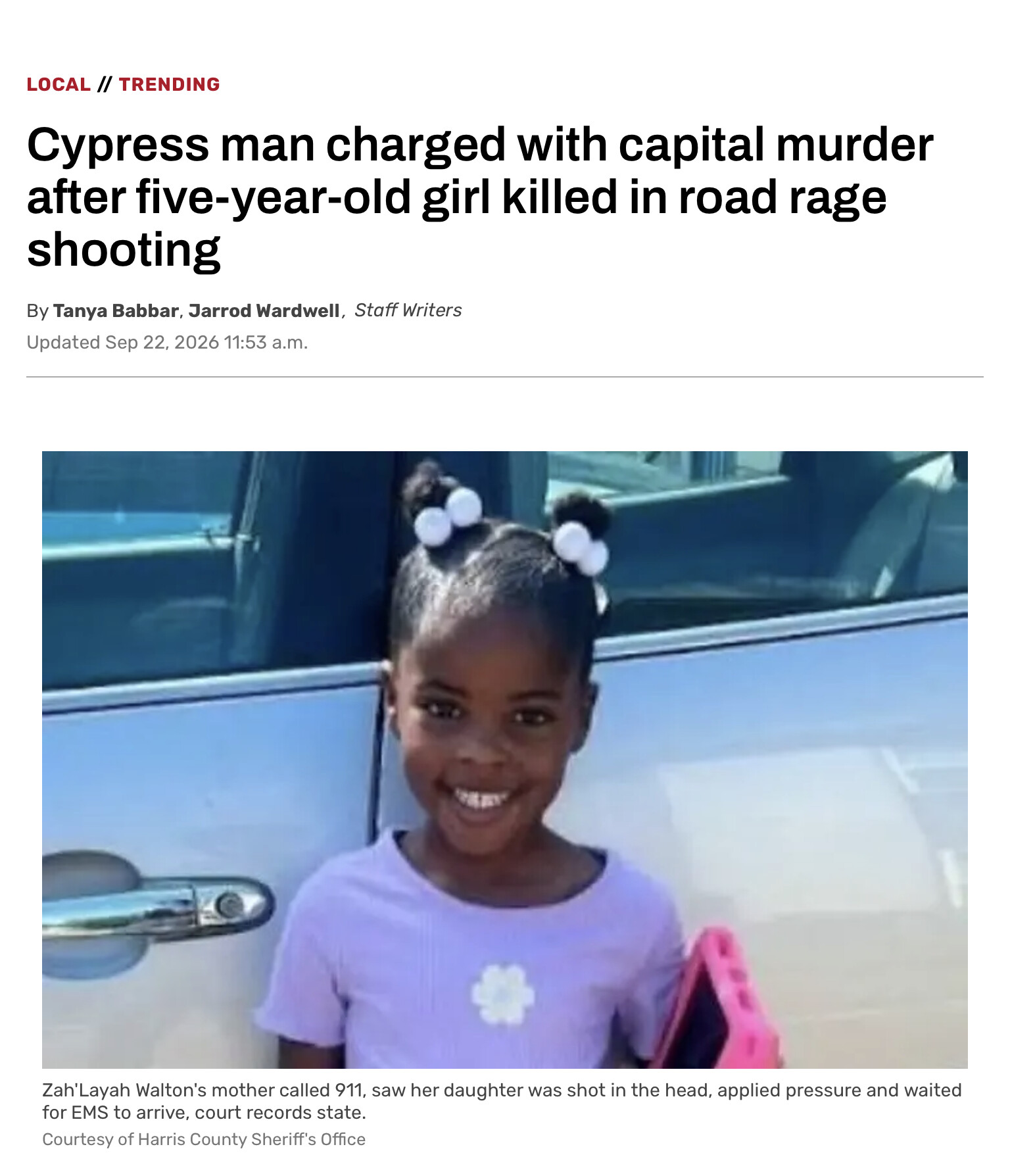
Interesting enough this in Chron today on shooting that happened in my neck of the woods.
Porter was arrested after authorities tracked his vehicle to the driveway of his Cypress home using Flock surveillance cameras, Marshall said. Investigators who reviewed footage of the truck did not see damage to the truck’s door prior to the shooting.
There’s also a concerted effort to create good press for these cameras.
Since they knee-jerked throwing them up everywhere without proper controls, it makes sense to take them all down, develop the controls, THEN install them where appropriate. But that won’t happen because the government loves them.
My sense of things is they will be coming down; but could very well be reading the tea leaves wrong. Our privacy laws are, mostly a joke - thinking of the internet aspect of the discussion. All the “opt” out stuff is mind numbing. What we have in place seems to be to benefit the internet companies. Looking at Europe, they have much better privacy laws in regards to internet and for cameras as well. Interesting read if really interested how to do it right for both, imho.
Should we knee jerk shutdown the internet since nobody thought privacy issues before we had any privacy requirements in place
(which we still don’t) ?
 )