That’s not household income though. $185k in household income is hardly rich, especially in high cost areas.
Not to mention this would he a tax increase which is different than not giving a tax break.
That’s not household income though. $185k in household income is hardly rich, especially in high cost areas.
Not to mention this would he a tax increase which is different than not giving a tax break.
Yeah, that’s why I said specifically individual. Two earners in that range would have household income potentially near the $400k. That’s well off imho.
And yes when a portion of your income is exempt from taxes( 6.2% ) I call it a tax break or tax exemption, if you prefer semantics
I saw that but it can be misleading. And I specifically called out that it wasn’t household for that reason.
Two earners doing that, yes. That’s not always the case. For a single earner household, you’re not rich at that level. It’s pretty much median household income in the Bay Area for example.
And if you aren’t taxed now but would be in the future and it takes a change in federal law to make that happen, I’d call that a tax increase.
Sure, that’s the point of raising the cap, to raise tax revenue. And
at same time those 95 percentile earners lose
some the social security exemption on income they now enjoy; but tax rate of 6.2% remains same. So in one sense it’s not a tax rate increase.
Probably already got your wish as I have made much more money due to my TCU degree than I have because of my UH degree.
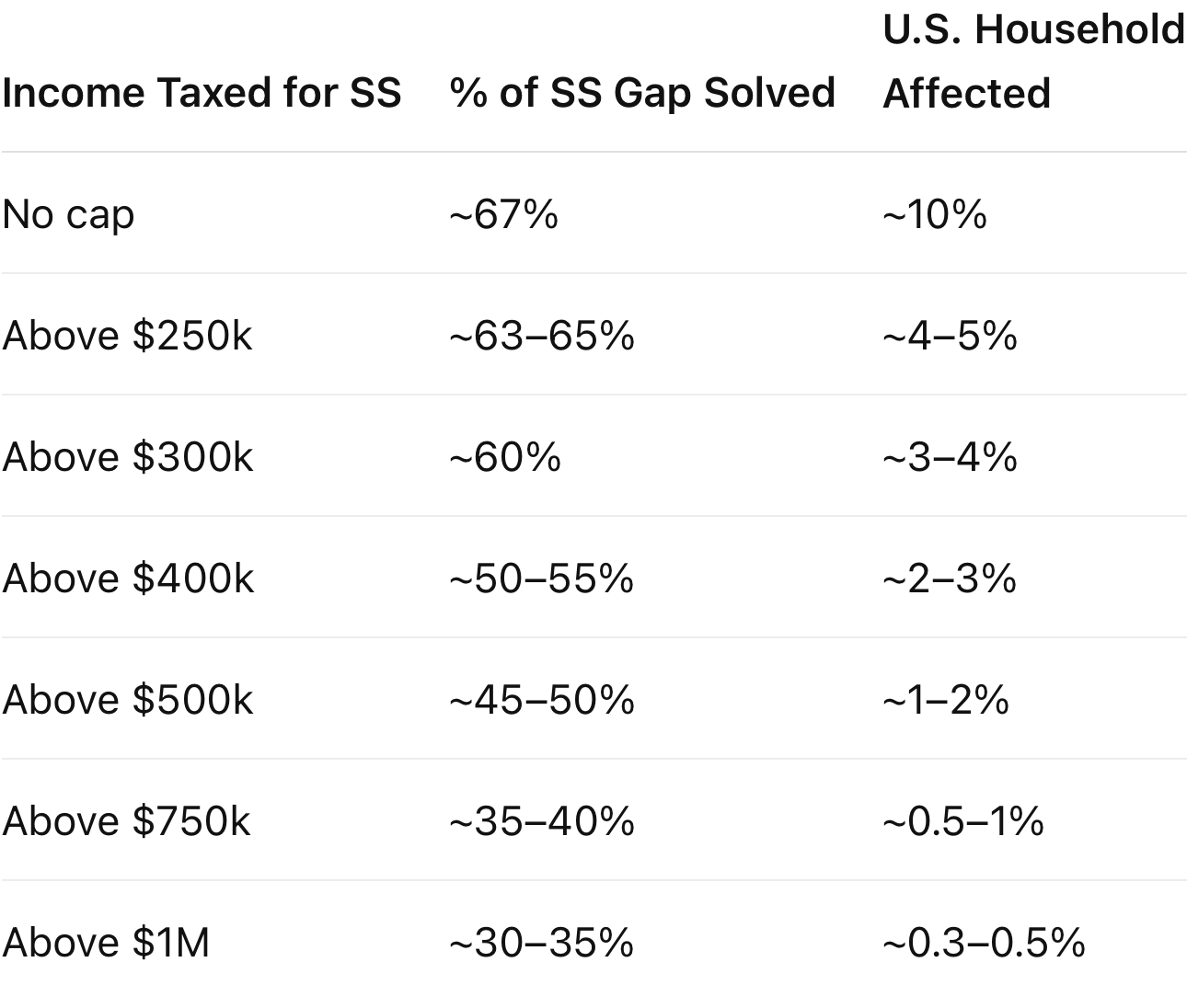
A little increase to individual limits maybe 250-300, but it is fairly arbitrary. I’m flexible. I do prefer cap to no cap as I think society should pay for society and not just rely on wealthy to pay for society. If there was no cap, I would not complain either. I think the payout formula being prorated is far far far more important.
No issue with raising early age to 65 with re-evaluation every 10 years for potential later raises.
I do find it funny with all the people in the top 5-10% of earners complaining about how tough it is to live on their salary or being called well off, rich or any other term that might imply they have money.
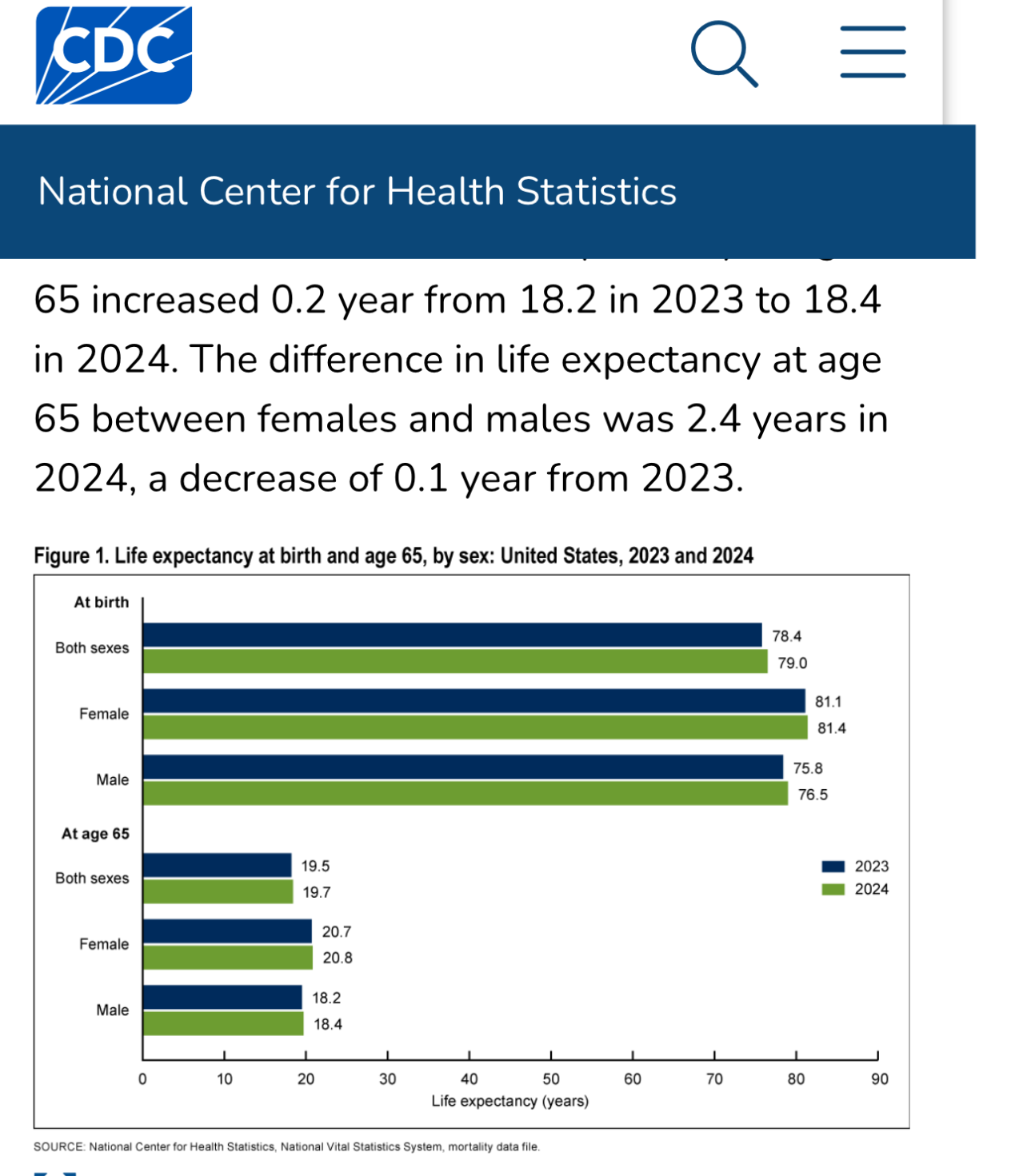
At 65 for early benefits, avg us male would
get about 10-11 years of checks. I didn’t bother to look how much that may save by raising it 3 years. But here again, I’m thinking higher earners have the advantage of living longer.
The harder you work the less you make and probably the less you live.
Edit- Wealty individuals get an extra 9-10 years of life and checks it seems…per this site.
Wealth is strongly associated with longevity.
Mortality rates among older adults in the bottom 60% of wealth were nearly double those of individuals in the top 20%. In fact, those in the bottom 20% of wealth died on average nine years earlier than those in the top 20%
That would seem to imply that the higher earners should pay more in…therefore there should not be a cap. If it raises more revenue than the funds going out, then it would be logical to lower the rate across the board from 6.2% to whatever covers the next years obiligations.
You got the first part right, it’s MY MONEY, appropriated by the government for 51 years. Now it’s payback time. It’s not the government’s and it’s certainly not yours to dole out to po people.
Now get off my lawn and your hand out of my wallet.
I highly recommend putting up a fence around your property with a gate in front. Give your property a name and declare sovereignty so you wont have to give any more of your money to the US government.
Might need to take your money out of US banks and put into gold and silver bars. One cool aspect is you can make your own passport and make it look how you want.
Lots of info on the web if you need it.
It’s a social insurance you pay into.
Old-Age, Survivors, and Disability Insurance (OASDI)
Eligibility for Benefits
In 1997, workers earn one Social Security credit for each $670 of annual earnings, up to four credits ($2,680 = 4 credits) per year
To qualify for Social Security a person must be insured for benefits. Most types of benefits require fully insured status, which is obtained by acquiring a certain number of credits (also called quarters of coverage) from earnings in covered employment. The number of credits needed depends on the worker’s age and type of benefit.
https://www.ssa.gov/policy/docs/progdesc/sspus/social-insurance-programs.html
Even in the City of San Jose, median household income at the last census was about $147k. If an individual is earning 25% more than the median San Jose household, they’ve got it pretty good. That’s enough to hit the limit on 401k contributions and IRA contributions and still be above the median household income. It certainly doesn’t have the spending power it would in, say, Houston, but it’s still pretty well-off.
Right, a household income of $185,000
puts you in the top 10-12% in the US. You’re doing very well. That’s why raising the income exemption cap ( or doing away with it) does cause me any grief.
Not really. The cost of housing is insane, among other things. Especially if they have any dependents.
You’re middle class at that level there. That’s my point. There are also more expensive spots like broader Santa Clara County where median is close to $170K.
Doing pretty good, probably. Rich and able to easily absorb a tax increase, probably not. Housing is nuts in San Jose. The median house note is $8-10k/month per ChatGPT.
Not top 10-12% of San Jose which is what he was talking about.
I’m using national numbers , not specific regional based. Social security is a national program . Granted, if you live in high housing cost zip code, you may not feel great about being a the top 5% individual earner or in a top 10-12% household.
But the numbers are what they are. We have a graduated income tax too, that does not make concessions for those that live in high cost zip codes. It is what it is.
But I get why those that live in these zip codes react to the use of the adjectives “rich” or “well off”. Today I’ll suffer with 95 degree heat and high humidity when I go outside; if I was in the bay area it would be much more pleasant outdoors. But there is a cost for that environment - less disposable income.
I’m just saying we would impact people that aren’t rich with this tax increase. That’s my point and has been from the jump.
From the beginning, I said I support this at higher levels. It seems like the best option to help solve the problem. I just think the tax increase should hit those at higher income levels.
We can do a lot of good in this space without hitting people who would definitely feel the sting.
@NRGcoog - I don’t care what the government calls it, the bottom line is that approximately 15% of my (and your) compensation is taken by force and without recourse. If you or I do it , it’s a felony.
I could have invested that money (in addition to my private savings) and retired worry free.
SS is just a gubment Ponzi scheme. Call it what it is. F”n thieves
© 1999-2025 CoogFans.com