Well, we won’t talk about how long it took for me to get my bachelor’s or master’s, on both I was in and out so much I would be busting the “designed” timeline for each. Unfortunately, not everyone can do what you did for various reasons.
Congrats, I guess. Your Certificate of Being a Very Special Boy is in the mail.
3 Likes
And this is exactly what’s being targeted here.
3 Likes
Can I get one of those for taking too long on all 3 of my degrees? 
2 Likes
Me too!
1 Like
Generally speaking, I think it’s a bad idea.
A university education should give one a broad sampling across diverse fields imho.
Think the governor should look at ways of funding universities from the state level to
lower tuition costs.
2 Likes
Tuition cost makes no sense whatsoever. The entire country tuition cost makes no sense. There are no justifications for it. They are operating like a cartel.
University tuition cost is equal to what opec does with crude oil prices except that tuition cost is always going up. They decide what they charge to their customers/students.
IMO, universities that have billions in endowments shouldn’t charge tuition. At the very least education costs should be minimal.
Ex. Harvard has approximately $56B in endowments and they still receive government grants.
You mean something like regulating tuition?
Why has that never been considered before?
2 Likes
Agree, college is too expensive.
The entire country tuition cost makes no sense. There are no justifications for it.
This is where we start to disagree. I don’t think state U’s make a profit but work within
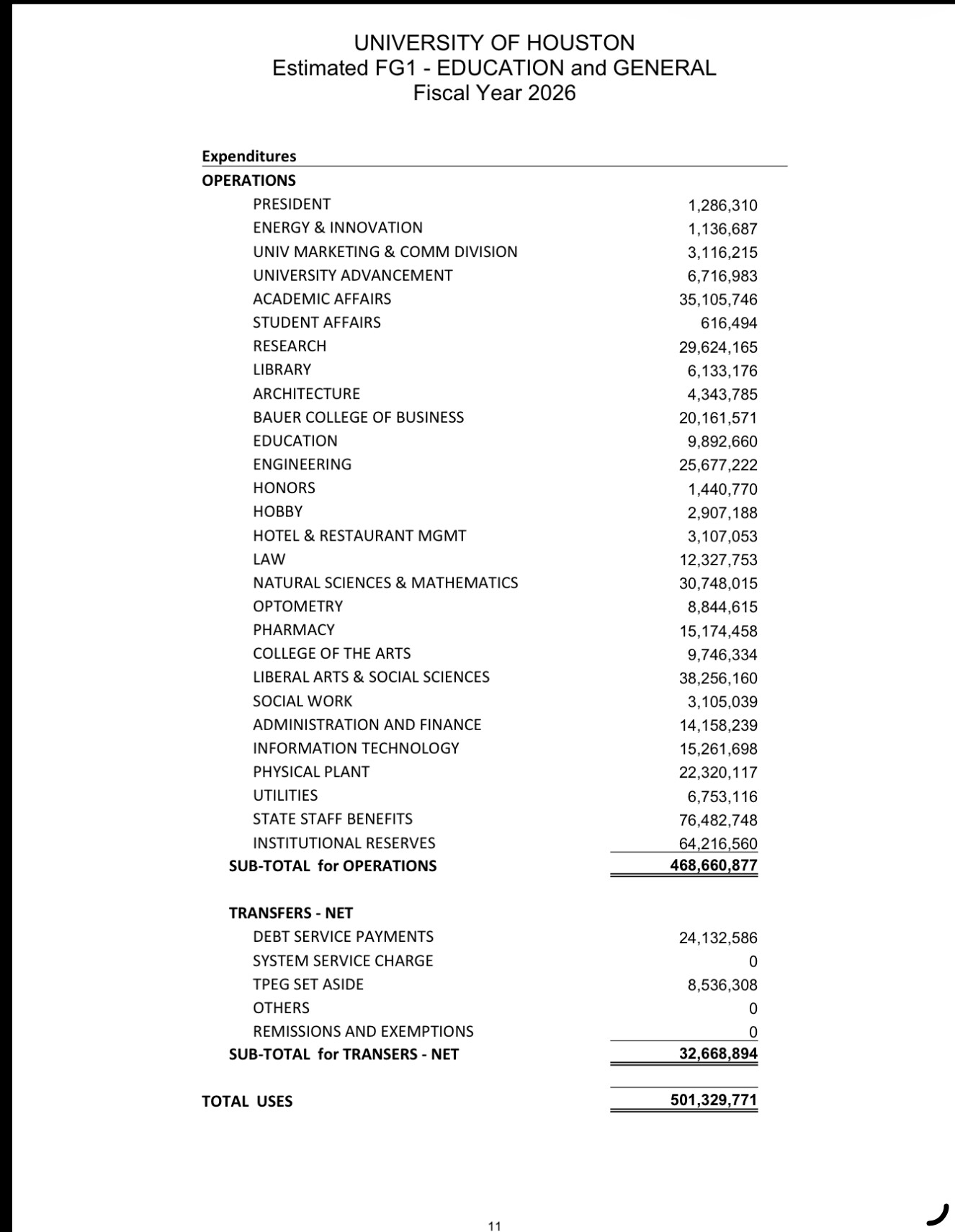
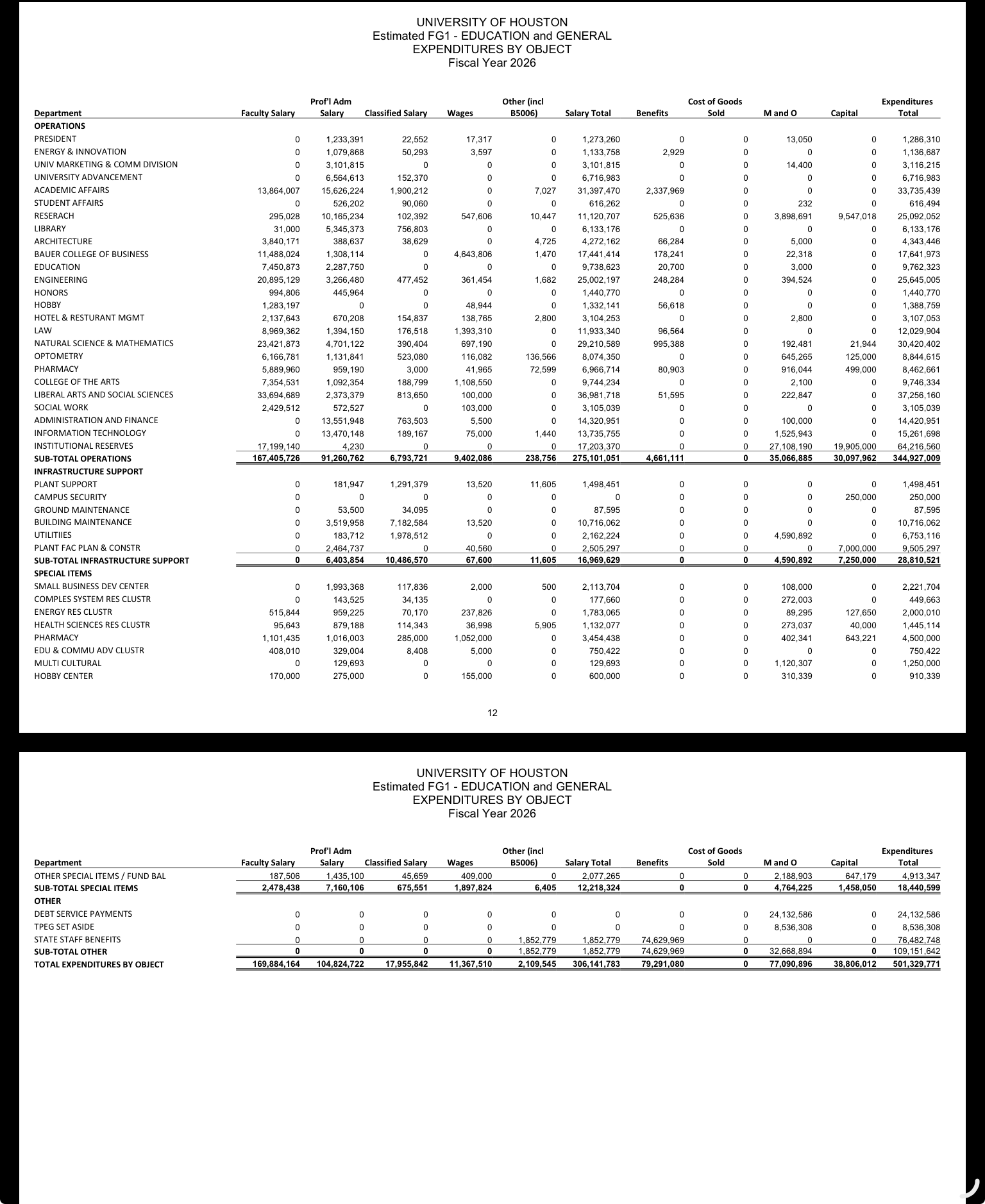
a fixed budget. I think majority of the budget goes to faculty salaries, physical plant, debt service, etc
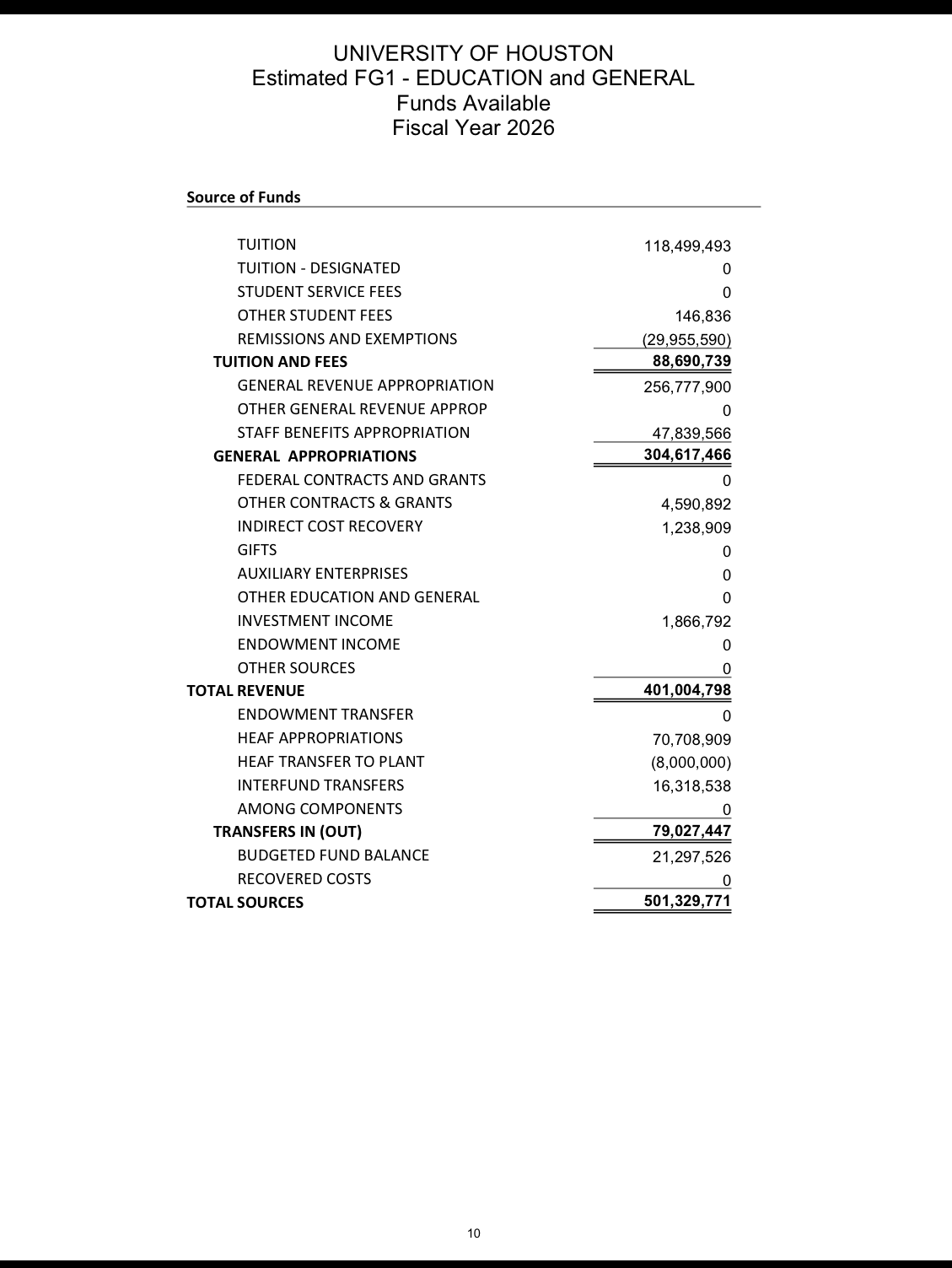
Tuition provides only about 20+ % of budget. What do you want to cut from these expenses ?
State universities are public institutions created and ultimately governed under state law. Also, governors generally appoint the boards that oversee them.
So if there is a cartel, it’s the states doing it. Given how poorly states tend to coordinate with each other these days, I’d say that’s highly unlikely.
It seems pretty clear to me that tuition is high mostly because students want it to be. Students are willing to pay hand over fist for things like more luxurious dorms, better sports facilities/teams, food courts, etc. Students will grouse over tuition rates and fees, but what they won’t do, for the most part, is choose a less comfortable experience to save money. If they did, college would likely be cheaper.
I don’t know, TSU generally hasn’t been spending money on luxury dorms or athletics facilities and their tuition is still high and people choose it. I’m sure there are other schools that would fall into similar categories. Also, don’t know what really qualifies as a luxurious dorm when a lot of them have rooms of around 200 square feet. Though I guess, a newer building not filled with mold and asbestos could be a luxury.
But sure, let students choose a school that has computer labs with old equipment, or libraries that are falling apart, because I mean why shouldn’t they just deal with it, put your head down and study. No more new classrooms, no more updating audio visual equipment, heck, lets save some money and cut plumbing costs just issue every student a plunger!
Really, students choose to go to college, they also choose which colleges they go to. However, they aren’t choosing which ones have the most luxurious stadiums, or dorms, etc. The current athletics fees that were voted on around 15 years ago by students (including myself) who are now alumni but the current students are unhappily stuck with it. The current or future students have little to no real say in the investment of facilities, or of the extra fees charged, sure they get to vote on stuff sometimes and may protest against it but these are often long term projects that they won’t actually take advantage of as students.
Its good that we want to continue to invest in our schools, its unfortunate that the legislature doesn’t which causes increased reliance on donors, student fees, and debt. I’m sure there’s administrative bloat as well, some of that university driven, some of that driven by needs to respond to federal or state legislative directives that didn’t come with additional funding.
Yeah, we need to be clear on the costs.
Tuition only brings in 119 million. If 48k students, That’s about $2,480 each student pays in tuition, on average ??? Not huge.
May be missing something from that data set.
On the expenses side, salaries comes to
$275 million. Over 1/2 the budget. I don’t think we want to cut professors or academic staff numbers or their salaries.
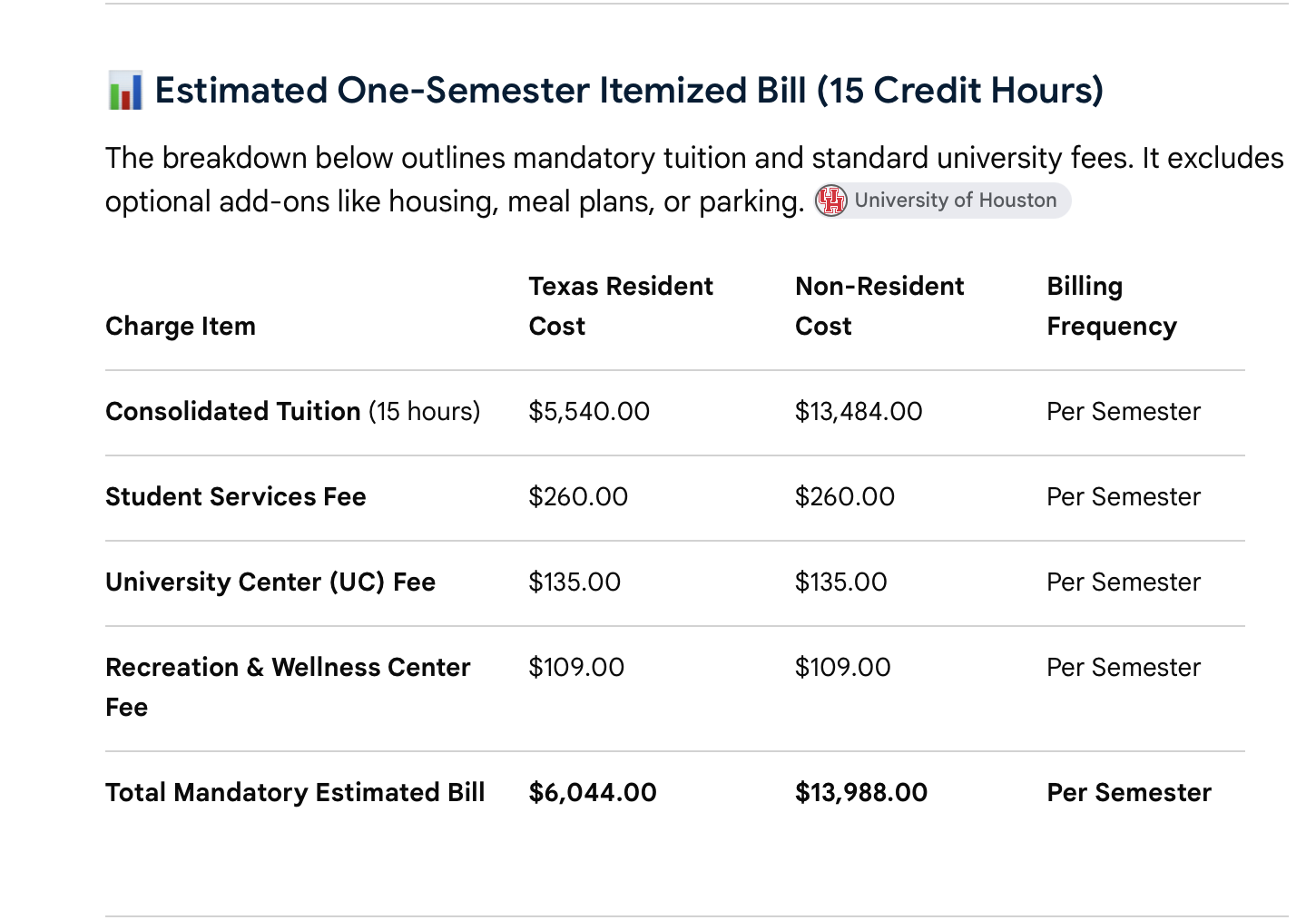
It would be helpful if someone could post a bill of what they are paying to UH (masking personal details of course). The numbers above don’t add up for me. Or I may just be missing the obvious 
But getting back to your point, yes the nice housing and stuff adds up.
Yep, there is a simple supply and demand thing going on here. Costs are high because students are willing to pay for it. That’s what markets do.
Now you can certainly argue that the states shouldn’t allow that and should step in to subsidize and/or force universities to charge lower tuition.
1 Like
I Googled this just out of curiosity.
…
Countries with Free or Nearly Free College
[image]
Norway: Public universities are tuition-free for all students, including international students, though you must pay small semester fees and cover living costs. [1, 2]
[image]
Germany: Most public universities charge no tuition for undergraduate students, though some states and institutions charge small administrative semester fees or non-EU tuition. [1, 2]

Iceland: Public universities are free for all students, requiring only a small annual registration or administrative fee. [1]

Finland, Sweden, and Denmark: Public higher education is free for citizens and EU/EEA students, but non-EU/EEA students typically pay tuition unless they secure a scholarship. [1, 2, 3]

Austria and Slovenia: Tuition is free or very low-cost for domestic and EU/EEA students, and remains relatively affordable for others. [1, 2, 3]

Argentina and Panama: Public higher education is free to all, including international students, though instruction is generally in Spanish. [1, 2, 3]

Brazil: Public universities are tuition-free, but programs require fluency in Portuguese. [1]
Some departments, like Buisness or HRM, have additional fees on top of that. Of course that doesn’t include lab fees where applicable but those are course by course.
Sure, but outside of architecture, engineering certificate fee, or study abroad, I’m not seeing real bank breakers .

Edit…books can add another $1,600. UH
estimator …no idea why it’s stuck on 2023…
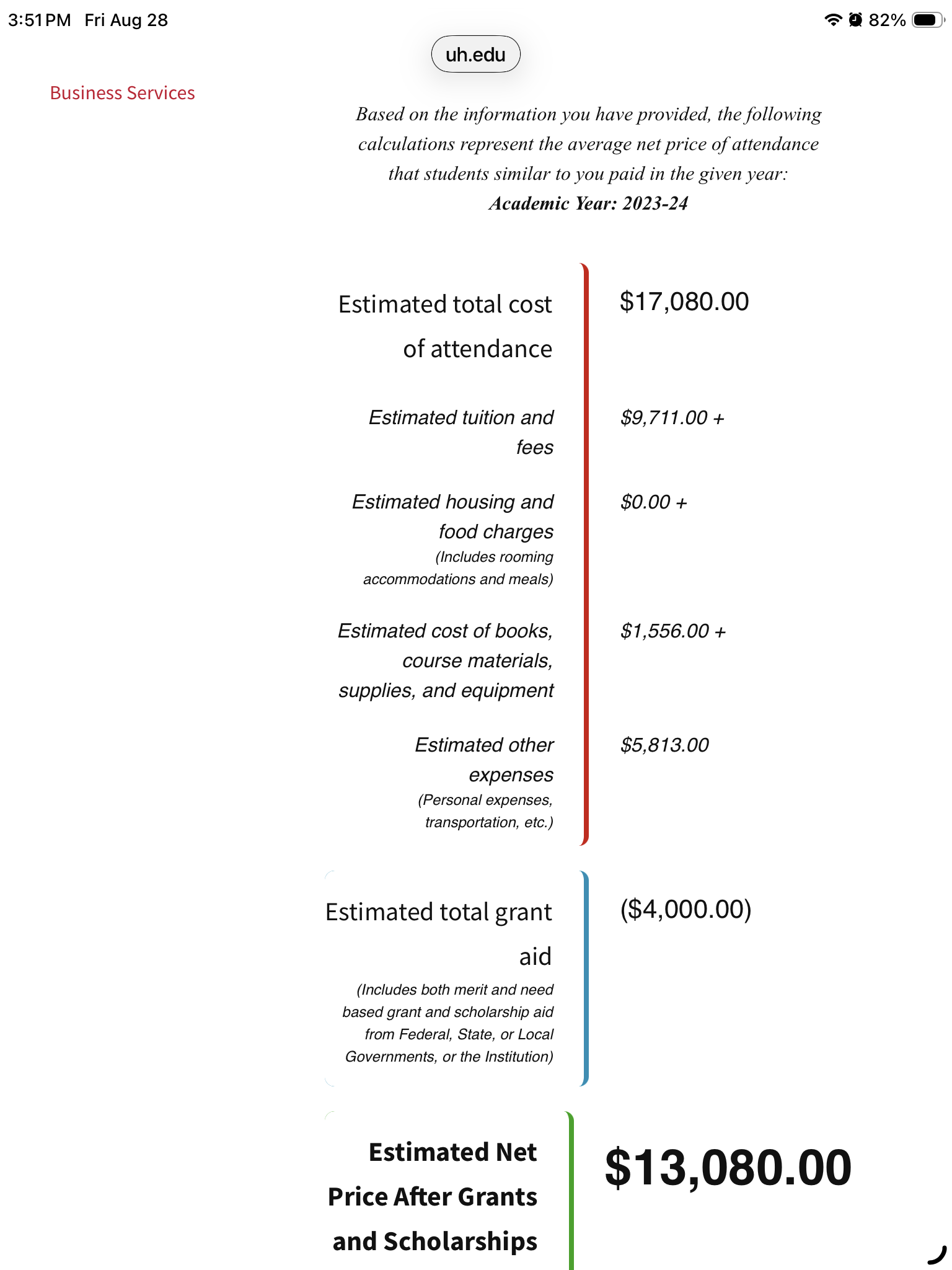
books are free if you don’t buy them. IYKYK.