First lettuce & Jalapenos… now a beef recall.
Yeah, not great for beef prices. 
This is the writer’s signature.
Gabe Hauari is a national trending news reporter at USA TODAY. You can follow him on X @GabeHauari or email him at Gdhauari@usatoday.com.
His article is about:
Nearly 30,000 pounds of raw beef products imported from South America have been recalled in two states because they entered the United States without undergoing a required inspection.
What about trying to find out how this happened?
Someone would have.
https://www.youtube.com/watch?v=pLdzba8fXCo
1 Like
Yes it would be great to know why the USDA failed and did not give the meat a second inspection as required. The reporter, or others, could very well be looking into that.
However, it is important to get the recall information out as quickly as possible. The story shouldn’t have been held until they could report on why the failure occurred.
3 Likes
Fair enough. I never wrote that the story should be held. These “bad inspections” or lack there off seem to be common. How many times this seems to happen? Does the USDA need more inspectors? A few years back one of my client’s brother died from contaminated beef through Jack In The Box. It made National news at the time.
I didn’t mean to suggest you did, what I meant was your complaint about the reporter was unfounded as he did his job the way it should be done. I do hope he (or someone else within his newsroom) is investigating further.
We definately should demand more from our government. Keep in mind the USDA has less resources than it did two years ago. Not to say this couldn’t have happened before, as we know it has, but with less resources, there will be less inspections.
This is for sure an area where we should all be demanding answers from Congress & the Executive Branch and should be a non-partisan issue.
I don’t care about finger pointing, I want to know how we’re going to fix it.
3 Likes
The USDA has had an impossible job forever and only inspect a small
percent of meats - 10-15%. With cuts of 18% to USDA , those rates are even
lower.
The answer of course is more spending to hire more inspectors. But that
doesn’t seem to be on the national agenda yet.
AI summary…
The U.S. Food and Drug Administration physically inspects roughly 1% to 2% of imported food shipments (which includes fresh produce) at ports of entry. For imported meat and poultry, the U.S. Department of Agriculture’s Food Safety and Inspection Service re-inspects a similarly small physical sample of shipments—often estimated around 10% to 15% of incoming loads—after verifying that the exporting country’s entire regulatory system matches U.S. standards. [1, 2, 3, 4]
Produce Oversight
- Food and Drug Administration: The U.S. Food and Drug Administration oversees the safety of imported fruits and vegetables. Due to high trade volume and limited resources, physical port-of-entry inspections typically cover only about 1% to 2% of total incoming shipments, relying heavily on electronic risk-screening, foreign country audits, and targeted sampling. [1, 2, 3, 4, 5]
Meat Oversight
- Food Safety and Inspection Service: The USDA Food Safety and Inspection Service requires every exporting nation to maintain a system equivalent to U.S. rules. At the border, inspectors perform physical re-inspections on a fraction (roughly 10% to 15%) of arriving commercial meat containers unless specific flags or risk factors trigger a higher volume of scrutiny. [1, 2]
If you would like to explore this further, let me know if you are interested in:
- The country-of-origin labeling rules for these items
- Specific pesticide or pathogen testing rates for produce
It reminds me of what I was told about TABC and businesses that sell alcohol (retail/bar/restaurant/brewery/distillery/distributors). There’s like 50K licenses, plus another 100k out of state licenses that they have to regulate and only a couple hundred TABC Law Enforcement Agents while the agency has a total cap of all full time equivalent employees of around 600 (including auditors, administrative, legal, etc.).
Is it just me or have there been more food recalls than this year than years past?
It sure seems that way but I’m sure there isn’t just one reason for that, like for instance one of the reasons could also be companies just more quick to recall than they would in the past to avoid lawsuits and the like.
Due to missed inspection doesn’t mean it was bad meat
No, not normally, but this sounds like there is a reason.
The recall is being classified as a Class I recall, which, according to the USDA, means a health hazard situation where there is a “reasonable probability that the use of the product will cause serious, adverse health consequences or death.”
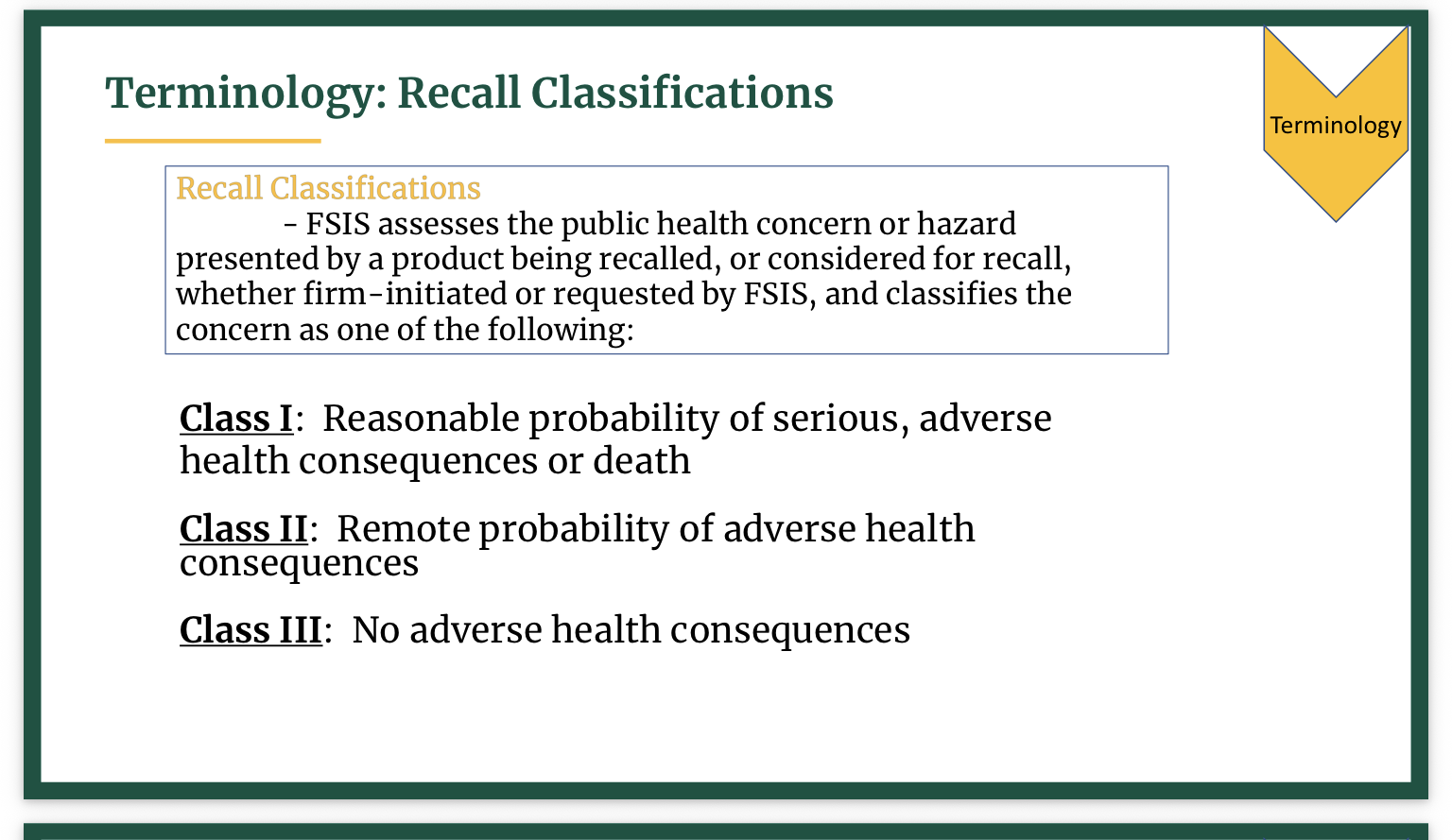
https://www.fsis.usda.gov/sites/default/files/media_file/documents/CEIAO_Recall_Effectiveness_Checks.pdf
1 Like
I don’t know about you, @firstandten but I think seeing that, I’d probably not eat it.
1 Like
also, raspberries. news nation ran a report the same infection that hit iceberg lettuce also hit some raspberries.
1 Like
Florida & TX… We’re good up here in Cackalacky… 
Yeah… the summary and the details in the article don’t align…
A missed inspection shouldn’t cause death… at least not imo…
1 Like
Death was the most extreme result and not the only potential impact listed. Also, it’s not that it will cause anything but has a reasonable probability of it.
I’m most interested in how or why it missed inspection.
A reasonable probability of ending in death from missing the inspection sounds like it can cause death… 
But maybe it will just end in serious adverse health conditions if you’re lucky…
Sounds like they just classified it in the most serious classification that they could to get attention to it…
I’ve used this trick when I’m debugging something that isn’t getting the attention it should from other teams… classify it as critical and potential stop ship and it gets a lot of attention… lol
It said this -
“reasonable probability that the use of the product will cause serious, adverse health consequences or death”
I’m just saying it didn’t say it would or should cause death. It was looser than that. Maybe they could have left or death off though. Severe health consequences would probably cover that.
Here’s ChatGPT’s take on it -
In that article, the key phrase comes from the USDA/FSIS definition of a Class I recall:
*A situation where there is a “reasonable probability” that using the product will cause “serious, adverse health consequences or death.” *
Those words sound more alarming than what happened in this particular recall, so it’s worth separating them.
“Reasonable probability” does not mean “more likely than not” or that there’s a 50%+ chance you’ll become seriously ill. In the recall framework, it means there is enough of a credible potential hazard that serious harm is reasonably foreseeable—not merely a remote or theoretical possibility. FSIS doesn’t assign a numerical percentage to it.
“Serious adverse health consequences” generally means consequences significant enough to involve things like hospitalization, substantial illness/injury, lasting impairment, or death—not ordinary temporary discomfort.
But this beef recall is unusual
The Corte Argentino recall in the article wasn’t triggered because USDA found E. coli, Salmonella, or another contaminant. The approximately 2,300 pounds of raw beef were imported without receiving the required FSIS import reinspection. And importantly:
*FSIS reported no confirmed illnesses or injuries associated with the beef. *
So the Class I designation does not mean USDA determined that this beef was dangerous. The problem is that because the required inspection step was missed, USDA cannot provide the normal assurance that it met U.S. food-safety requirements.
That’s an important distinction. “Class I” describes the regulatory assessment of the potential consequences if the unverified product is unsafe, rather than saying there’s evidence that eating this particular beef has a high probability of causing severe illness.