If the pollution and lung disease problems can be solved, yes.
There’s a lot coal underground but as of today, it causes too many problems. Plus it’s currently not all that easy to extract.
If the pollution and lung disease problems can be solved, yes.
There’s a lot coal underground but as of today, it causes too many problems. Plus it’s currently not all that easy to extract.
in a solar farm you will lose a lot in the transmission as opposed to solar onsite. To measure things in megawatt hours, which is what most power plants measure costs by; coal comes in around $23 to make a megawatt hour of electricity with the next best thing being gas at around $44 and those lovely renewables are barely in the same neighborhood with wind costing around $142 and solar costing around $396.
have no idea what you are referring to, i’m not hunting replies in other threads, i post what i want and move on.
That would be asking the country to do something it’s never done
I agree that Nuclear is the most efficient form of energy, but the hurdle is the cost.
Like I said in OP, the startup costs for nuclear is far too expensive for private investors. It would take massive subsidies to get investors, and I just don’t feel that Americans would be willing to take on those costs.
It can 10+ years to build a utility-scale nuclear plant (labor, red tape, environmental regulation, testing, etc.) Once it actually starts generation energy, it could then take another 10 years to finally break even on the initial investment
as @NRGcoog puts it, every type of energy sector wants its own product to scale. The only way for energy to be cheap is via scale, and it’s not possible to scale every type of energy source
Nuclear would be expensive to restart in a major way. The rest can and are being done. Will they all be successful? Probably not and that’s ok.
We don’t have to focus in one area. Fortunately we’re not.
Well technically we still are focusing on one area, oil and natural gas.
The entire global economy is still fundamentally wrapped in oil and natural gas throughout the entire supply chain of almost every industry
I’m not sure what you mean by saying “the rest can and are being done”
That’s why use HVDC transmission power lines; it’s the most efficient.
Where are you getting those numbers from ? Natural gas has displaced coal due
to cost.
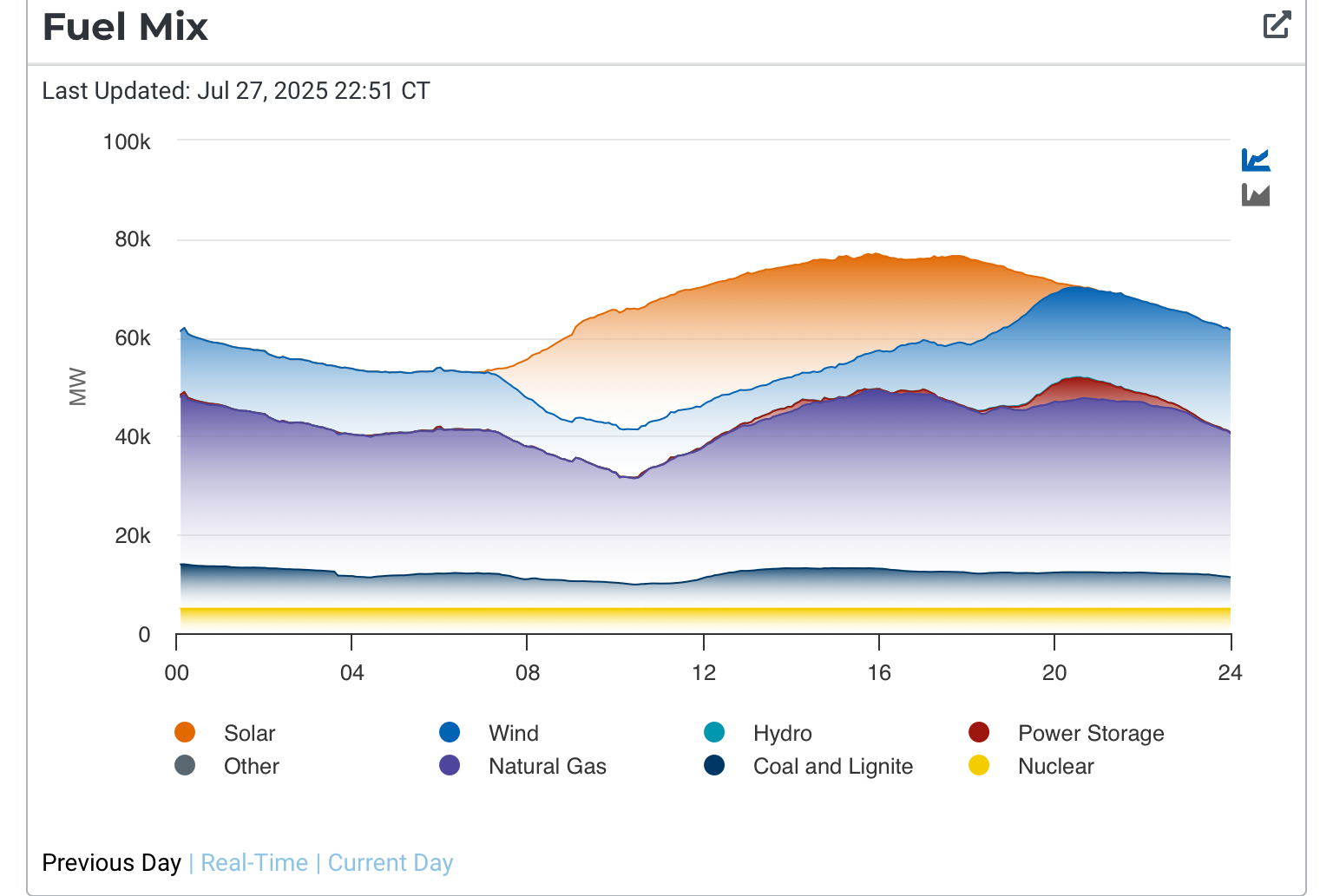
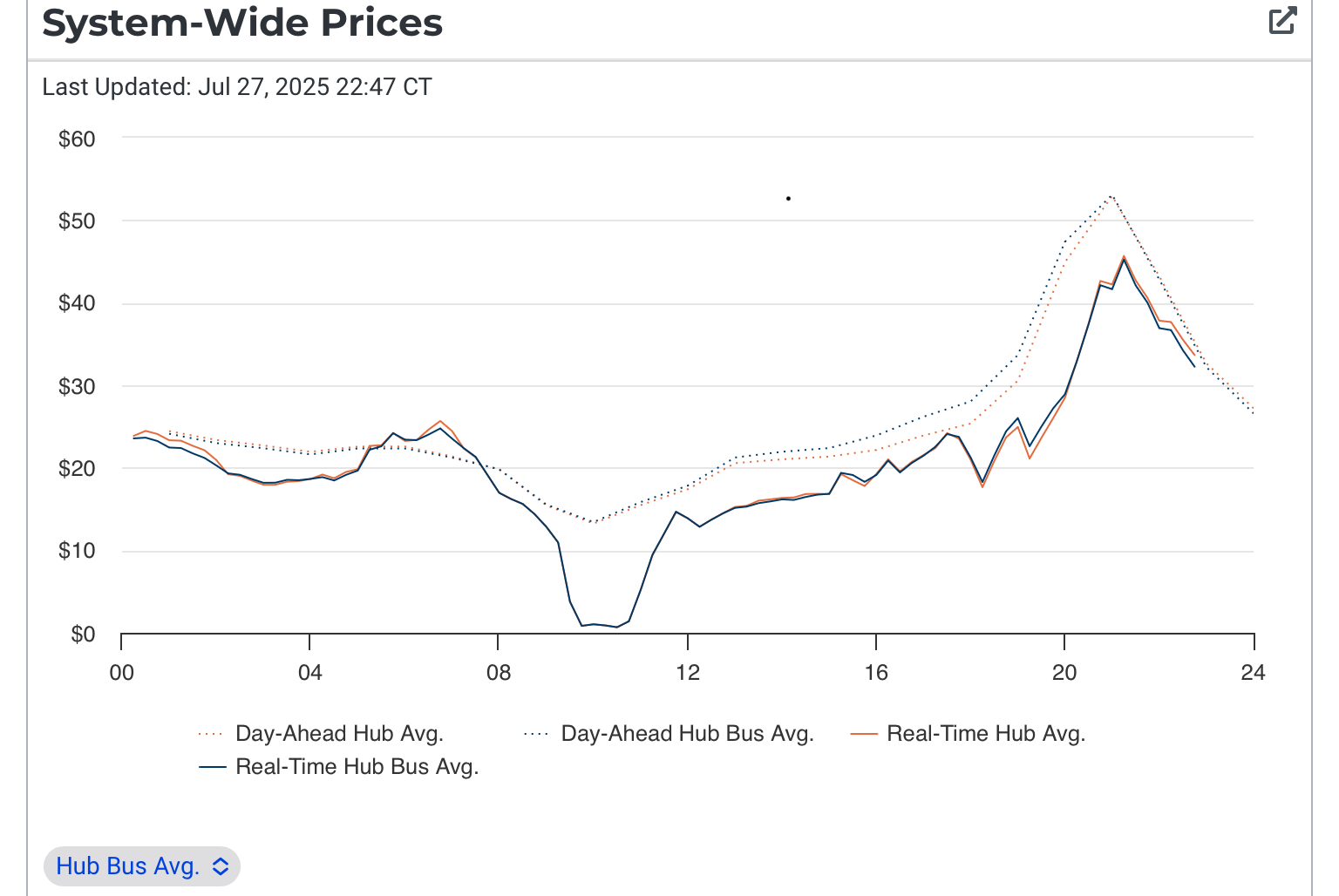
Notice in these ercot graphs the contributions wind and solar make to the overall
power generation in Texas. Also notice in the other graph when prices go to near zero. In the video posted in this thread, the ercot spokesperson said the reason
we have not had power warning this year is because of the renewables with power
storage. He also stated solar is the cheapest and easiest to add capacity.
If the focus was on O&G, you wouldn’t see acres of solar farms and wind farms across the country. Global O&G trade isn’t due to a “focus” on it - it’s because those are portable commodities, while other sources (besides coal) aren’t.
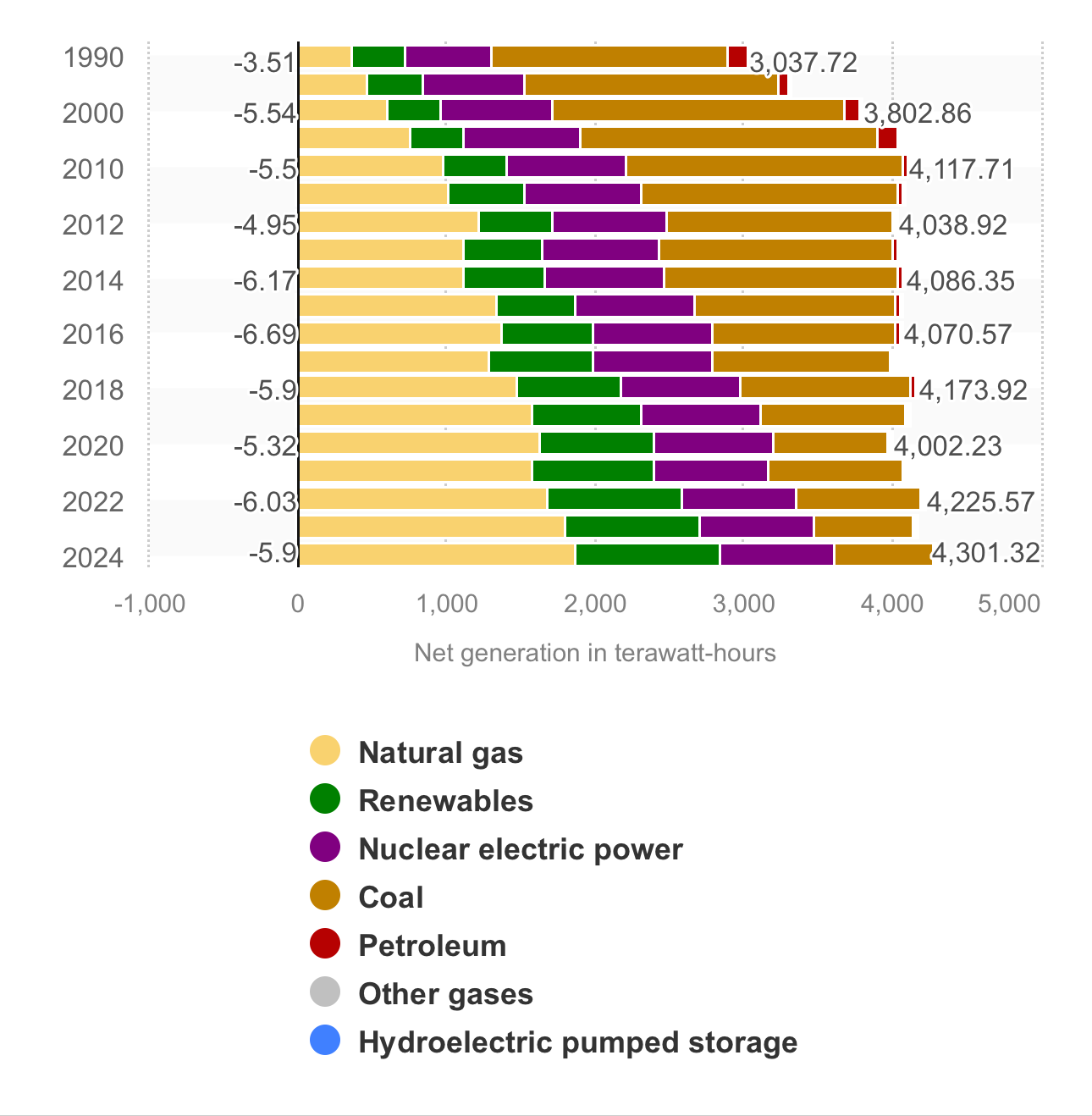
Fossil fuels account for about 60% of power generation in the US. It’s only that low because of the years-long focus on other sources.
We are doing plenty of renewables and it’s grown a ton over the last couple of decades. Not sure how that’s happening if no one is focusing on it.
That doesn’t mean that’s all we are focusing on.
Not sure why that’s confusing. It means we are doing a lot more than oil and natural gas. You listed a lot of things and we are doing them.
I’m not honestly not sure what you’re focusing on with energy. I guess electricity but it’s not clear. And all of the things you list don’t do the same things and some don’t even produce energy (e.g. carbon capture).
If we are talking about electricity, things have changed a lot the last 3 decades and will likely change more in the future.
30 years ago people could have been saying the same thing about coal.
The primary reason for the sustained growth of natural gas is the prolonged price depression, especially over the last 20 years or so. It’s kind of amazing when you consider that the demand for natural gas has increased coal generation has been replaced, yet the prices remain low.
At some point, that has to change, and you’ll hear people clamoring for nuclear expansion.
That’s possible. I’m all for using natural gas as much as possible. We’d be crazy not to. We have a ton of it in the US.
That doesn’t mean we only focus there. That would be an awful idea. Just like it would have been in 1995 saying we should throw all our eggs in the coal basket.
I could’ve worded my point better i apologize
Essentially, my point is that our economy cannot exist in its current form without oil and natural gas, if the intent is to sustain everything that oil and natural gas brings. If you take away natural gas from your graph, then that results in major problems What the powers that be are attempting to do is sustain the modern cost of living/cost of doing business while transitioning to other forms of energy, which I do not believe is possible. We also need oil and natural gas to build the very infrasture that’s going to replace it, which is the ironic part.
Regarding coal and natural gas - both are reliable and dense sources of energy (disregarding the emissions issue). It’s not the same as comparing natural gas to solar power, where the latter is intermittent and less energy dense. While solar is cheaper to generate as the data shows, it doesn’t include cost of storage or getting the energy to the grid
Regardless, we will run out of economically extractable oil and natural gas at some point, so it wouldn’t be wise to not already invest in its replacement
Because US Shale produces a ton of it as a by-product of oil production.
The oil and gas industry wants to build MORE LNG plants based on projected demand for the future, but investors are hesitant because they don’t know what the energy landscape will look like come 2040-2050 and so on
That being said, the irony to your statement is that I believe Natural Gas (and Oil) prices will actually INCREASE once demand declines. This is because once major revenue sources such as ICE vehicles are majority replaced by EVs (say, 60%), then this will result in the increase of prices for industries that are incredibly difficult to transition (steel, plastics, cement) to replace the revenue lost from sources such as transportation.
I’m very familiar with the price dynamics in oil and gas for the last 30 years, and gas didn’t start to fall because it’s a byproduct of oil production. Horizontal drilling in the Barnett kicked off this shale thing, and it was all about gas. The Marcellus followed and it also targeted gas.
The development of a reliable LNG market and extension of pipeline networks has made gas produced in the northeast valuable enough to keep drilling, as spot prices can get pretty volatile. Still, continuing weak prices have been the ruin of numerous oil and gas companies who focused on natural gas.
Regardless, the point is that it is in abundant supply, and it’s not because of any heightened focus or diversion of resources from other potential energy sources. I think that solar and wind have been slow to improve efficiency largely because there has been little incentive to do so, but it will happen or they’ll begin losing investment dollars.
The frustrating thing about solar is that it should really be focused on local (homes, businesses) generation rather than large solar farms that are terrible for the land. But utility companies look for ways to make that less attractive because they don’t get a cut.
Well that’s what I’m alluding to unless I’m not reading you correctly. The Shale Revolution made Natural Gas abundant in America, thus resulting in low gas prices. Much of US Shale Oil production has far more Natural Gas being extracted than Oil itself especially today as well production/productivity declines.
Unless new technology occurs today that can access hard-to-extract rocks, then this trend is going to continue.
Perhaps throughout the early 1900s Natural Gas prices were somewhat stable, but the technological ecosystem at the time didn’t necessarily call for large amounts of demand.
Regarding Solar - You could argue that oil fields or large refineries are terrible for the land (which they are depending on context)
Cost of fossil vs renewables, but without false facts.
Because it is in The Senoran Desert Tucson did the logical thing and increased Solar production.
The original goal was to create 30% of electricity via Solar. As that is being achieved ahead of schedule have read that the % from Solar will increase.
The City owns lots of property South of town where the solar panels are installed. They also store Colorado River water in 300 feet deep pools which go down to the natural acquifer. The city water is a mixture of the two sources.
Rooftop solar panels abound in Tucson, as well as Phoenix. Annual rainfall is 6 to 10 inches.
As I read that, it’s strictly discussing the comparative cost of power generation, and it does not include transmission fees and interconnects. There are also costs associated with trying to level out production with demand spikes. I think battery storage improvement will help this a lot, but it’s a real cost right now.
It’s almost impossible to get truly unbiased data, and like most sources, the one you linked has an agenda, as well. That doesn’t mean it’s all BS, but it isn’t the whole story, either. But the point that wind and solar have made huge strides toward competitive power generation costs is absolutely true. Stuff like this is just dishonest, though, and makes it clear that they’re not just trying to inform:
The cost of fossil fuel energy remains stagnant, if not increasing, from rising fuel costs among other factors. This technology’s long existence means that any cost-saving innovations have already been realized and incorporated into new and existing generation plants.
When people bring up the fact that solar and wind are the cheapest forms of energy, it’s true as you say. However, it typically doesn’t include storage costs/battery costs or transmission cost
I believe it’s merely generating the energy at the source.
Downstream, fossil fuels are still the cheapest forms of energy
Because fossil fuels don’t need any sourcing storage and are immune to transmission losses? lol. Yea right?
© 1999-2025 CoogFans.com