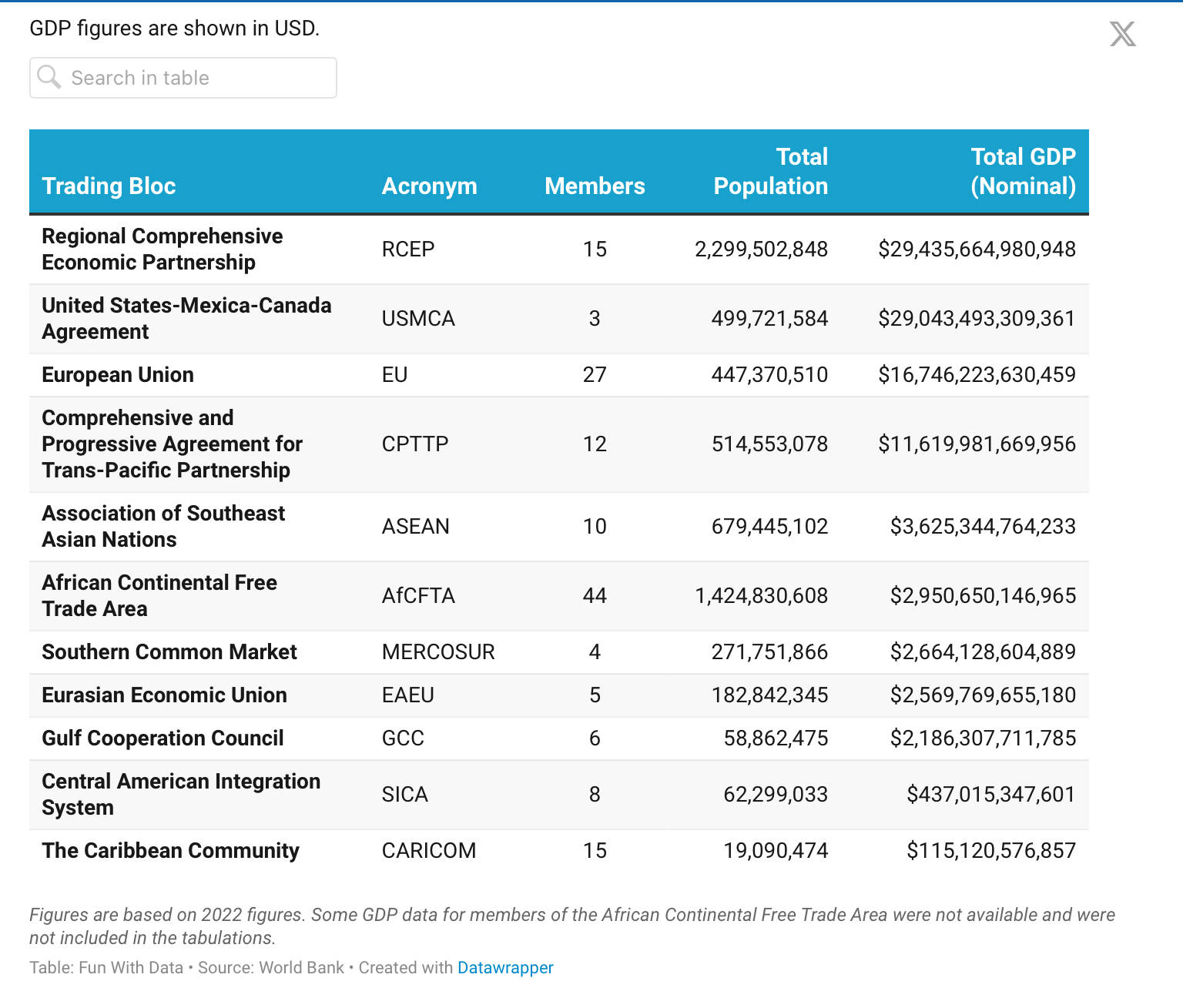
Trading blocks are very important and we no longer live in the 1960s when
the US seemed most dominant in technology and economics. Living with past perceptions is crippling. The US is putting itself in a dangerous situation.
3 Likes
Seems like we are drivng our allies toward China instead of away
Canada’s deal with China signals it is serious about shift from US - BBC News Canada's deal with China signals it is serious about shift from US
1 Like
Correct in the absence of stable leadership, others will step in to fill the void.
1 Like
Gee, China dumps cars and buys canola oil. That Carney is slick
canada/toronto/ford-carney-china-electric-vehicles-9.7051590
Probably more important right now to tell the toddler to rightly go F himself for his antics.
2 Likes
I mean

I guess
1 Like
Everyone’s favorite CEO is the biggest winner. Thanks Canada.
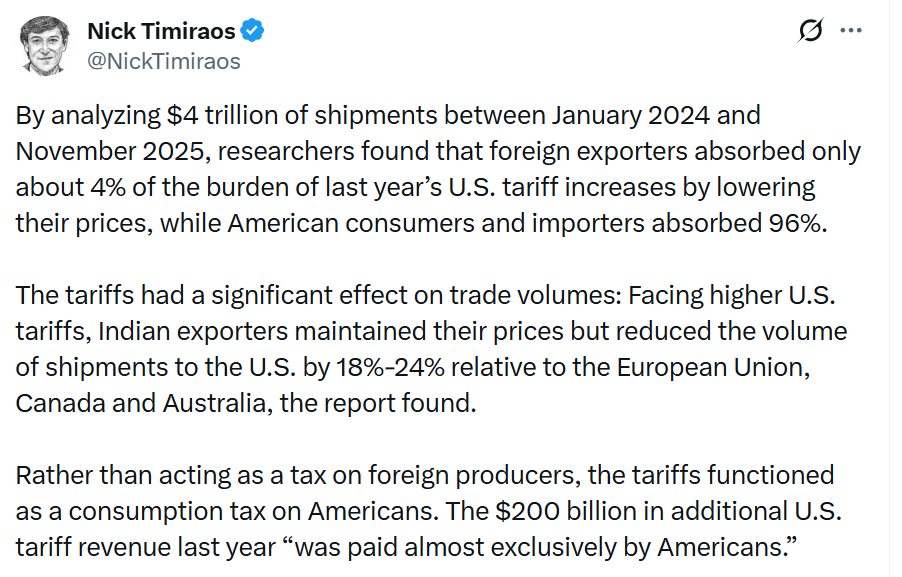
Weird how some posters swore tariffs were not going to be paid by Americans. So basically, it’s a consumption tax paid by Americans.
2 Likes
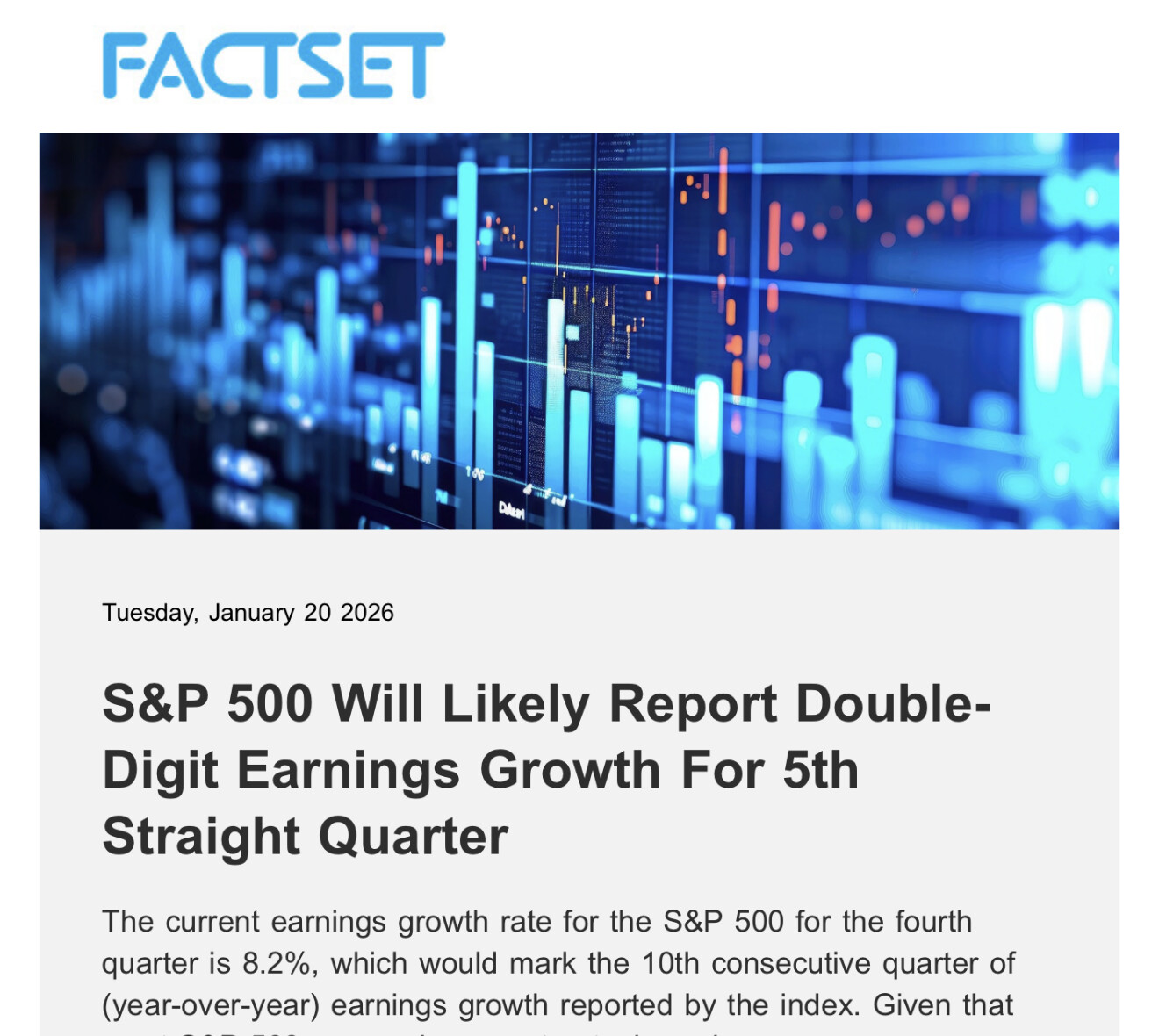
Atlanta Fed upping GDP estimate
Markets hate uncertainty, remember “Liberation Day” in April?
1 Like
Forced a lot of backing off. Hope for same again.
Equites are a bit overpriced. I welcome a correction.
Good time to shop.
1 Like
.
.
.
Grok —
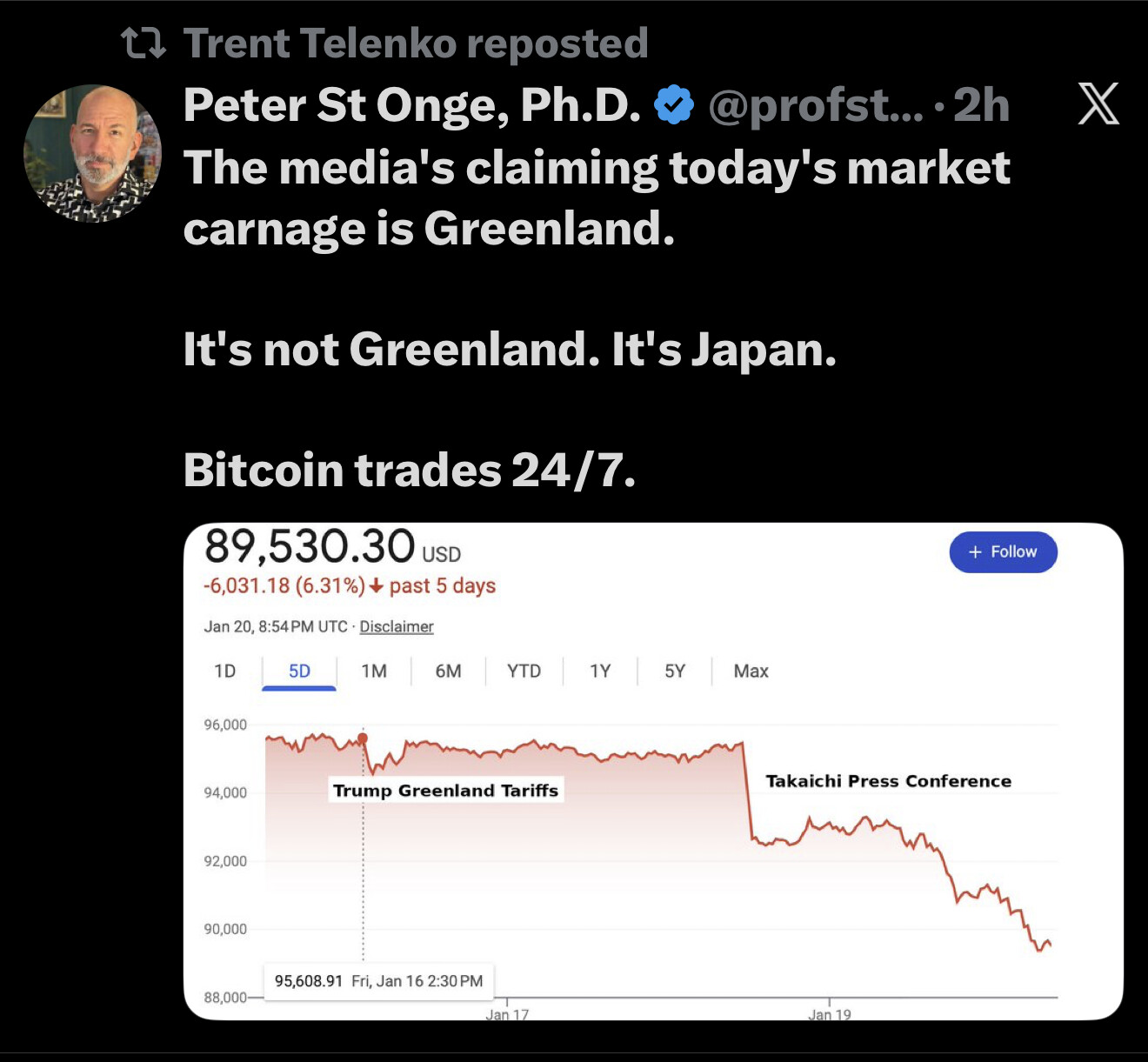
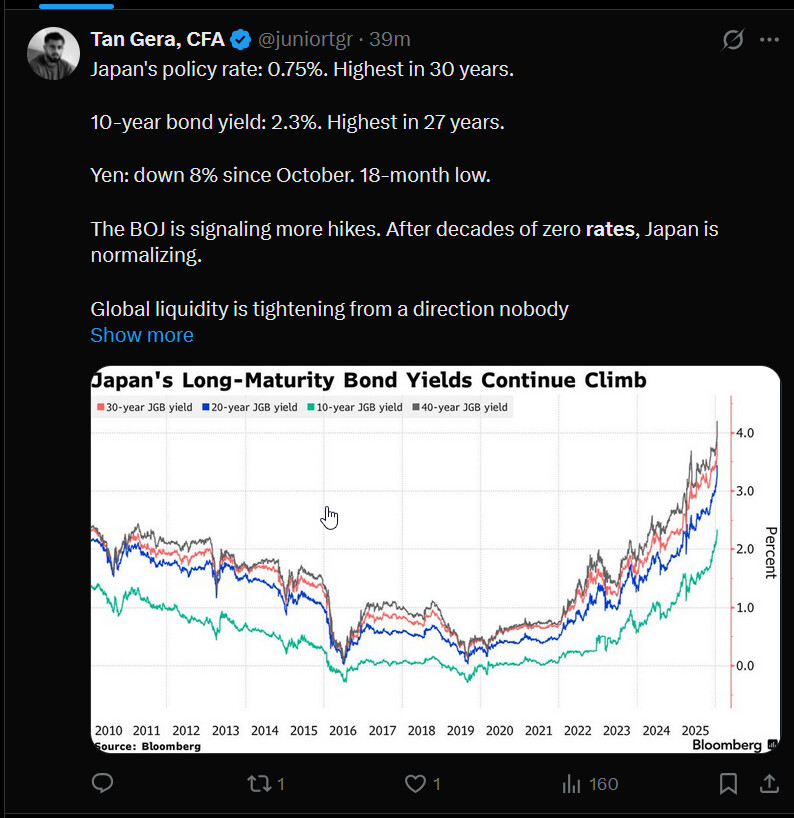
Japanese Government Bonds (JGBs) experienced a significant sell-off on January 20, 2026, driving yields sharply higher across the curve. This movement stems from investor concerns over fiscal deterioration amid Prime Minister Sanae Takaichi’s proposal to reduce the sales tax on food (potentially to 0%), combined with announcements of increased government spending and a snap general election scheduled for February 8, 2026. These policies raise fears of larger deficits in Japan’s already heavily indebted economy, without clear offsetting revenue measures.
Key yield levels as reported on January 20, 2026:
-
40-year JGB yield: Reached a record high above 4% (specifically reported at levels such as 4.213% to 4.215%), the highest since the maturity’s introduction in 2007 and the first time any JGB maturity has exceeded 4% in over three decades. Intraday spikes included increases of 25–29 basis points.
-
30-year JGB yield: Surged to approximately 3.91%, a record high since the 30-year maturity began in 1999, with daily increases of around 30 basis points (and up to 42 basis points over two days in some reports).
-
20-year JGB yield: Rose to around 3.454%–3.48%, a multi-year peak, with jumps of 19–22 basis points on the day. Demand was weak in a related auction, exacerbating the sell-off.
-
10-year JGB yield: Climbed to approximately 2.34%–2.38% (with intraday highs near 2.384%), the highest level since 1999. Daily increases ranged from 7–16 basis points, with cumulative rises of about 19 basis points over two days in some accounts.
The sell-off in long-dated JGBs spilled over to global bond markets, pushing up yields in the U.S. (e.g., 30-year Treasuries briefly above 4.9%), U.K., Canada, and elsewhere. This reflects heightened sensitivity to fiscal risks in high-debt environments. The Bank of Japan policy meeting this week is under scrutiny, though no immediate rate change is expected beyond the prior December hike. Volatility is anticipated to persist ahead of the election.
Data derived from market reports dated January 20, 2026; yields fluctuate intraday and reflect closing or late-session levels.
It’s both. And it’s not just the media saying Greenland.
2 Likes
Japan you say? Sony just sold their TV business to a Chinese company, coincidence?
Europe is a major holder of U.S. Treasuries, collectively owning trillions in U.S. government debt and acting as one of America’s largest external capital sources, with European investors holding significant sums in U.S. bonds and equities, giving them considerable economic leverage.
What would happen to the economy if we invade Greenland…eerrrrr annex it and Europe decides to sell off all our treasuries en masse?
Rates go up and Europeans lose money on sales