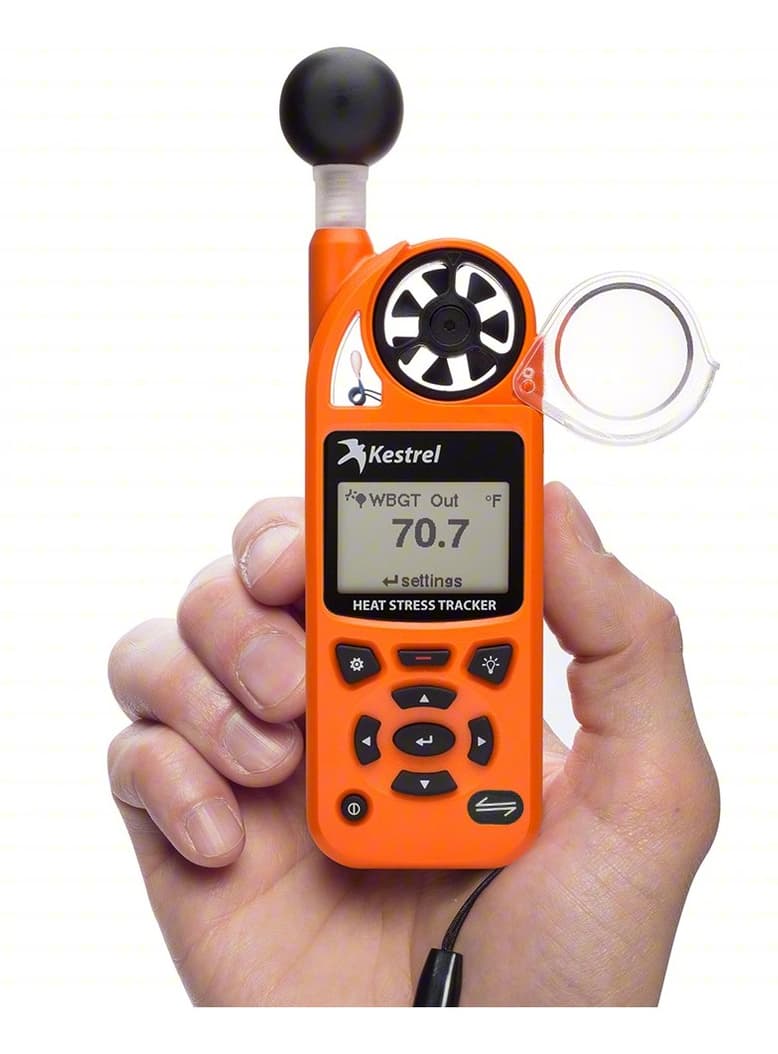
I know a lot of posters follow high school sports in Texas and effective August 1, 2026, the University Interscholastic League (UIL) will now require compliance with the American College of Sports Medicine Wet Bulb Globe Temperature (WBGT). The WBGT is a measure of environmental heat stress that combines: air temperature, humidity, wind speed, sun angle, and cloud cover into a single value. The UIL is using this measure to establish safe practice standards and prevent heat exhaustion. To determine the WBGT, there are hand-held devices being sold that take into account the measurements and provide the WGBT.
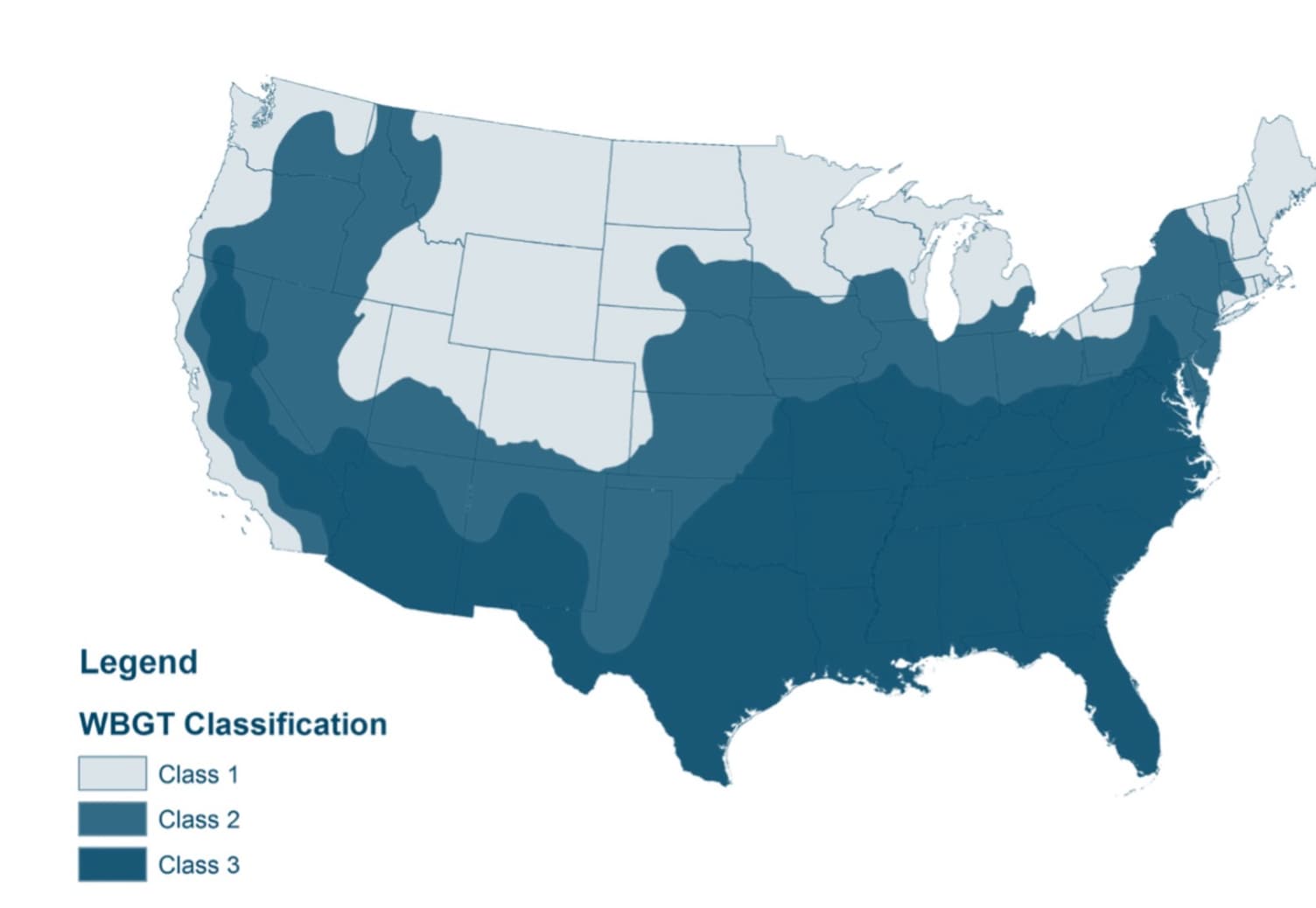
Activity standards for WBGT are geographic, identified as Class. Most of Texas falls under Class 3.
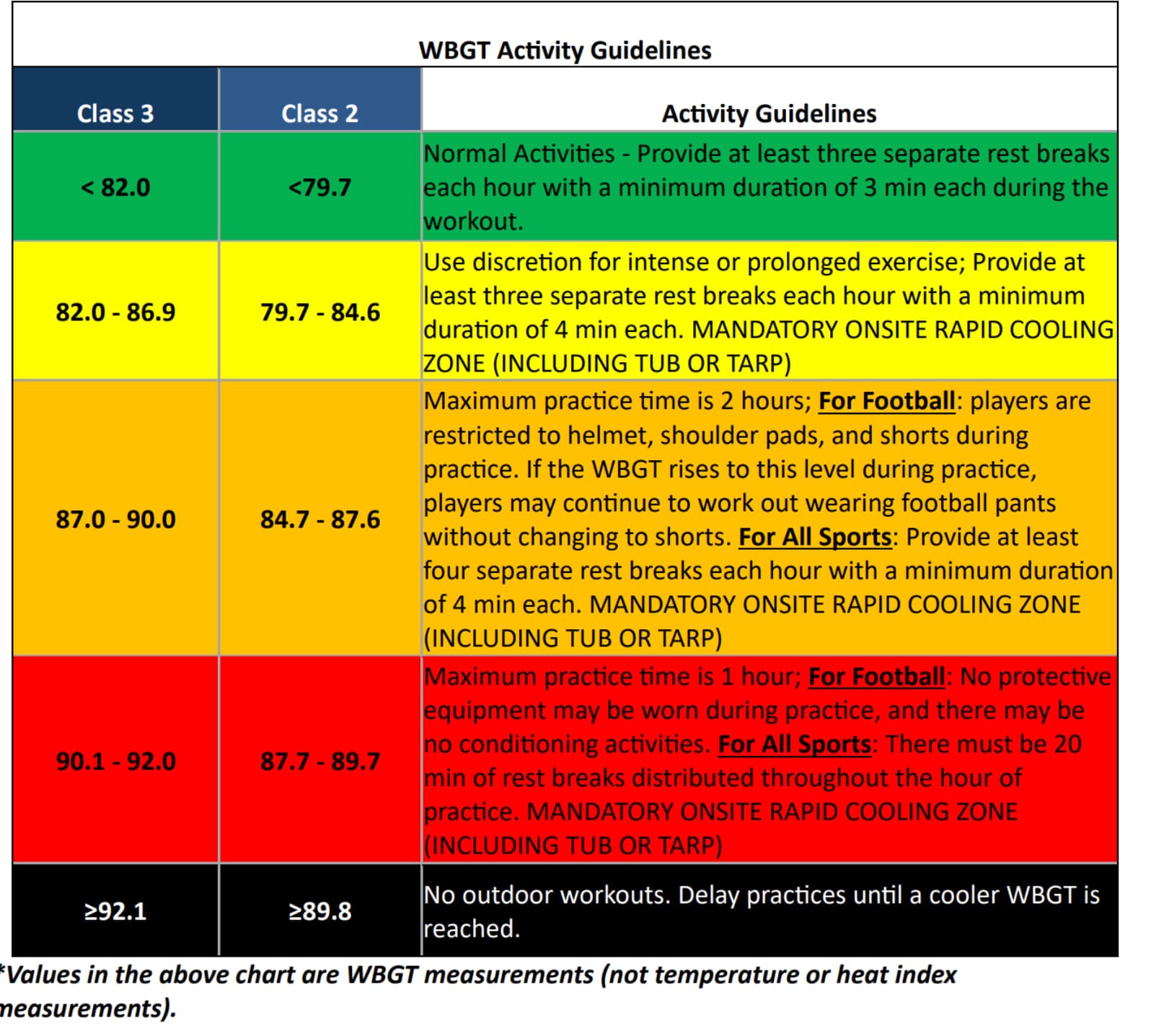
Depending on the WBGT number, practice may be limited, or cancelled alltogether, if there is a high risk of heat exhaustion. The numbers in the chart below are WBGT numbers, not temperatures.
SigEpCoog2005
(SHAUN - Bill Yeoman needs to be honored with a BOBBLEHEAD!)
6
My son is in band in CFISD and they are even using it and have been for a few years, we even had a little 3 song band performance on Friday night and wet bulb rules caused it to be held inside.
What is good about is it is a current reading so coaches and directors are incentivized to practice early the way Fritz has done for year, our school won’t practice after 10:30 am until after school starts, but I can see how there won’t be a lot of practice in full pads.
Here’s a little something for you. Your comment is typical; reflective of the mindset that is but doesn’t understand the reality of “obliterated.” Probably best for you is to take a sharpie and write 100 on a map wiyh a location 500 miles west of Houston. Then it’s real!!!
August in Houston is historically the warmest month of the year, with baseline average daily highs around 94°F to 95°F and lows around 75°F to 77°F. Over the decades since 1970, long-term climate tracking shows an unmistakable warming trend, moving past historical averages and producing intense, record-shattering heat waves. [[
General Climate Baseline & Shifts
Typical Range: Average daily temperatures range from a high of 94°F–95°F down to a nighttime low of 75°F–77°F.
The “New Normal”: According to NOAA Climate Data, updated normals show that Houston has added roughly a week’s worth of 90°F+ days over time, and average August peak temperatures have trended roughly a half-degree to a full degree warmer compared to mid-20th-century baselines. [[
Extreme August Heat Milestones
August 2011: Smashed prior long-term records with a historic mean average temperature of 90.4°F and an average high well into the triple digits, standing as a benchmark for severe Texas drought and heat. [1
August 2023: Obliterated the 2011 record to become the single hottest month in Houston’s recorded history (dating back to the 1800s). It recorded an astonishing average monthly temperature of 91.0°F and an average high temperature of 102.7°F, with multiple days hitting the all-time record high of 109°F.
The last two have been tough, as all Houston summers are, but that one was definitely in a class by itself.
In 2011, I was living in either the DC metro or Eastern Afghanistan. The latter was perhaps more brutal than Houston, with summertime highs often exceeding 120F.
High school coaches and band directors already work an insane number of hours, it will be interesting to see how they are able to fit practices in while working to keep the students safe and protecting their time for family and academics.
SigEpCoog2005
(SHAUN - Bill Yeoman needs to be honored with a BOBBLEHEAD!)
15
As long as all schools abide by the rules it won’t be a bad thing. They will just have to get creative with what they can do inside.
65 teenagers died of heat related causes during school or sporting events since 2000.
One other thing that’s different now is that so many schools are practicing on turf. Districts should consider spending some money on open-air covers for these practice fields. It isn’t cheap, but it’s more cost-effective than building full practice facilities - probably costs ~$1MM to go over an existing field.
SigEpCoog2005
(SHAUN - Bill Yeoman needs to be honored with a BOBBLEHEAD!)
18
Virtually 100% of these student athlete deaths are preventable when Wet Bulb Globe Temperature (WBGT) monitoring is correctly paired with immediate, on-site rapid-cooling protocols. Leading sports medicine organizations, including the Korey Stringer Institute (KSI), explicitly state that exertional heat stroke (EHS) is entirely preventable and treatable. [1, 2, 3, 4]
The implementation of mandatory WBGT recommendations addresses the specific breakdowns that historically lead to student fatalities. [1]
Eliminating “Blind Spots” in Weather Data
Traditional heat indexes only measure temperature and humidity in the shade. However, over half of all student athlete heat deaths occur during high-humidity morning practices when standard temperatures do not yet trigger “heat alerts”. [1, 2, 3, 4]
The WBGT Solution: By accounting for direct solar radiation and wind speed alongside temperature and humidity, WBGT identifies exact field-level danger zones. [1, 2]
Proactive Practice Modification
A primary cause of EHS is the internal heat generated by intense physical exertion combined with heavy equipment (like football pads and helmets). [1, 2]
The WBGT Solution: The new recommendations force strict, non-negotiable activity changes based on specific climate tiers. For instance, under rules implemented by organizations like the Texas UIL, hitting specific WBGT thresholds mandates capping practice times, removing heavy gear (such as protective pants or pads), doubling rest intervals, or canceling outdoor activity entirely if the WBGT reaches a critical level like 92°F. [1, 2, 3]
The 100% Survival Rule: “Cool First, Transport Second”
When preventative measures fail and a student’s core body temperature spikes above 105°F, death occurs because organs fail from prolonged, extreme cooking. [1, 2, 3, 4]
The WBGT Solution: Modern WBGT protocols do not stop at monitoring; they legally mandate on-site cooling zones equipped with cold-water immersion (CWI) tubs. [1]
The Data: KSI data proves that the survival rate for exertional heat stroke is 100% if the athlete’s body temperature is successfully lowered below 102.5°F within 30 minutes of collapsing. The mandate ensures the necessary immersion tubs are already filled with ice water on the sideline rather than waiting for an ambulance. [1, 2, 3]
Where these guidelines are actively codified into state law, heat stroke fatalities have plummeted to zero among participating schools.
I saw a guy get heat stroke, or heat exhaustion, when I was stationed in Sigonella, Sicily in the Navy.
We would hoop for hours in the gym with no air-conditioning and he collapsed and just started cramping everywhere and had to be taken to the base hospital.
SigEpCoog2005
(SHAUN - Bill Yeoman needs to be honored with a BOBBLEHEAD!)
20
Yeah, when I was in high school a kid a grade ahead of me died after an August open gym in a un-air conditioned gym.
From reading the AI I think the required Cooling zones are the real life saving part of these requirements.
My son is in band and has been in band camp the last couple weeks, I had no idea those kids worked as hard as they do.